


Easter in Iceland: Traditions, Opening Hours and Plans for 2027
Easter is one of the biggest holidays in Iceland, and it is a good time to visit if you like a local atmosphere. Families gather, the shops are full of chocolate eggs, and the country slows down for a long weekend. It also affects your plans, because some things close and the roads get busy.
Quick answer: In 2027, Easter Sunday is on 28 March, with Maundy Thursday on 25 March, Good Friday on 26 March and Easter Monday on 29 March. Good Friday and Easter Sunday are the quietest days, when most shops and supermarkets close. Guided tours can operate over the holiday, and many natural attractions remain accessible, although weather and road conditions may affect access. Expect winter conditions in late March, and plan meals and shopping ahead.
The 2027 dates
Easter moves from year to year, and in 2027 it falls early. Easter Sunday is 28 March, which means the long weekend runs from Thursday 25 March to Monday 29 March. Because it is so early, conditions will feel more like winter than spring.
What is open and what is closed
The long weekend changes daily life in a few ways. Maundy Thursday (Skírdagur) is a public holiday, and many shops keep shorter hours. On Good Friday and Easter Sunday, most shops, supermarkets and banks are closed, and some restaurants have limited hours. On Easter Monday, some shops reopen with reduced hours, and restaurants in Reykjavik are more likely to be open as usual.
Vínbúðin liquor stores are closed on public holidays, so plan any purchases in advance. Reykjavik restaurants and hotels stay open on most days, but it is smart to reserve a table for Easter Sunday, since many places book up.
Natural attractions are unaffected. Waterfalls, glaciers, geothermal areas and hot springs stay open, and opening hours at museums and swimming pools may vary.
Chocolate eggs and proverbs
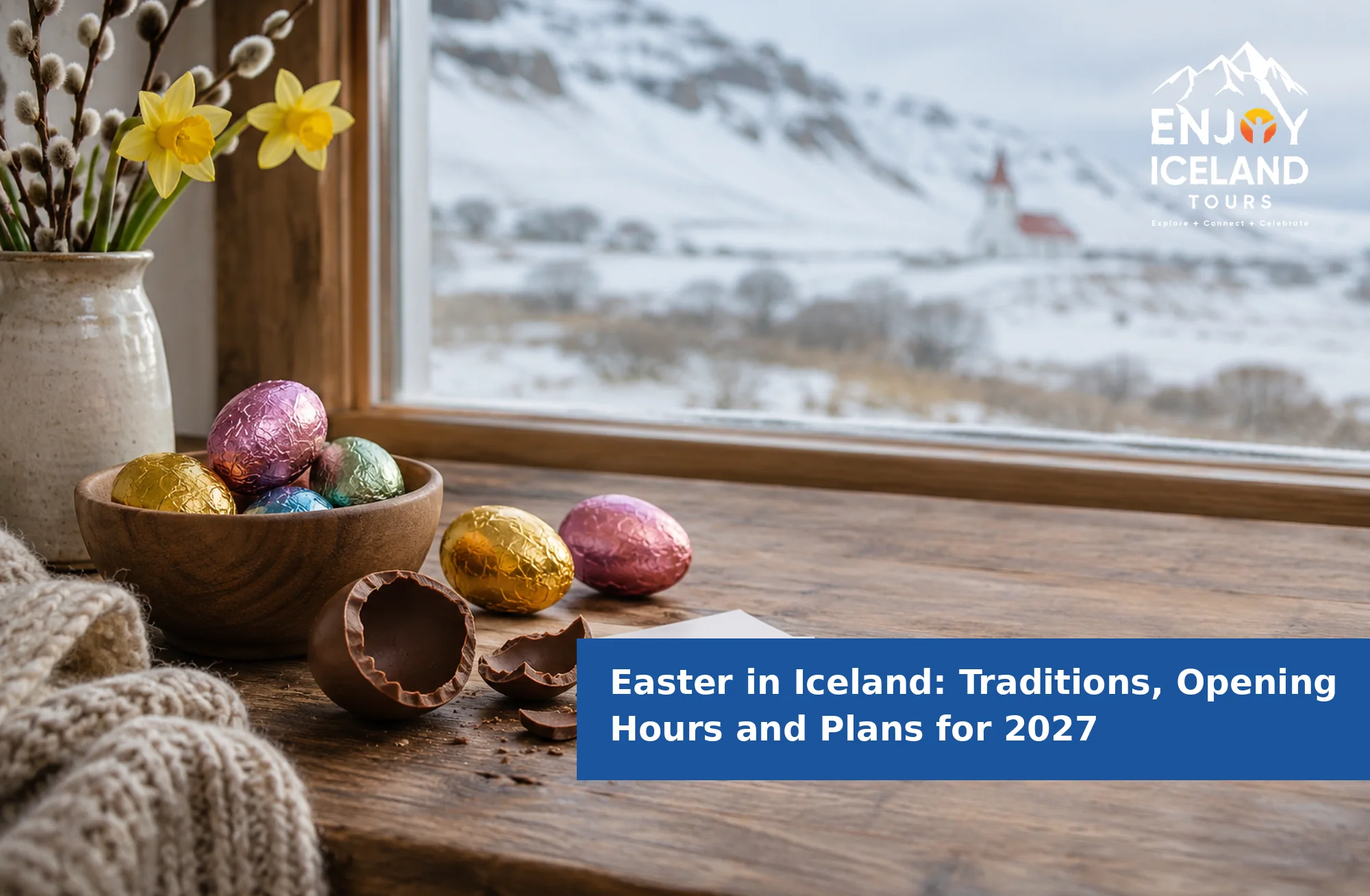
The best-known Easter tradition is the chocolate egg, or páskaegg. Shops stock them weeks ahead. They are usually milk or dark chocolate, often with a hint of licorice, and filled with candy. Inside every egg is a small slip of paper with a proverb, called a málsháttur. Families read them aloud before they start on the sweets, and the best proverbs get a laugh.
Hiding eggs for children on Easter Sunday is a more recent habit, and it is now common in many homes.
Easter food
The traditional Easter meal is slow-roasted leg of lamb, usually with caramelized potatoes, red cabbage, green beans and gravy. Some families serve rhubarb jam on the side. Coffee and cake or ice cream follow. Many people also drink Malt og Appelsín, a mix of malt drink and orange soda that is popular over the holidays.
If you want to try the food, book a table in Reykjavik ahead of time, and ask if the restaurant has a special Easter menu.
Events over Easter weekend
Aldrei fór ég suður is a free music festival held over Easter weekend in Ísafjörður, in the Westfjords. It has run since 2004, and it comes with a local ski week at the same time. In Reykjavik, Hallgrímskirkja and other churches hold Easter services and concerts. Check the schedules before you go, since times change each year.
Weather in late March
In Reykjavik and much of southern Iceland, daytime temperatures in late March are often around 0 to 7 degrees Celsius, although colder conditions are possible. Many Icelanders talk about an Easter cold spell. In an early Easter like 2027, snow and ice are likely, and conditions can shift quickly. The Northern Lights season runs from late August to mid April, so the lights are still possible on dark, clear nights around Easter. For more on the season, see our guide to Iceland in April.
Planning your Easter days
Plan for two things: closures and traffic. Allow extra travel time on Maundy Thursday and Easter Monday, when many Icelanders drive to summer houses and the roads get busier. Book hotels, restaurants and any excursions well ahead, since the long weekend is a popular travel time.
Good days for sightseeing are the ones where shops are closed. The Golden Circle works well, as do the South Coast and the Snæfellsnes peninsula. A private Golden Circle tour can be planned around the holiday closures, including where to have lunch. Private tours run over the Easter weekend, and we plan the days around the closures. Contact us early to book your dates. If you want to combine the holiday with a few quiet days around the country, a custom private tour lets us build the plan around your dates. For a longer stay, see our 3 day Iceland itinerary.
If you would prefer not to drive in Easter traffic and winter conditions, our comparison of private tour vs self drive lays out the trade-offs.
Enjoy Iceland Tours is a family-owned company in Reykjavik, running private tours since 2016. Every tour is for your own group, and we are happy to plan around the holiday.
Frequently Asked Questions
When is Easter in Iceland in 2027?
Easter Sunday is on 28 March 2027. Maundy Thursday is 25 March, Good Friday 26 March and Easter Monday 29 March.
What is closed in Iceland at Easter?
Most shops, supermarkets and banks are closed on Good Friday and Easter Sunday, and liquor stores are closed on all public holidays. Natural attractions stay open, and guided tours can still run.
What are Icelandic Easter eggs?
Chocolate eggs filled with candy, with a slip of paper inside that holds a proverb called a málsháttur. Families read the proverbs aloud before eating.
What is the weather in Iceland at Easter?
Usually between 0 and 7 degrees Celsius. In an early Easter such as 2027, expect winter conditions, including snow and ice.
Can I see the Northern Lights at Easter?
Possibly. The season runs from late August to mid April, so the lights are still possible on dark, clear nights in late March.