


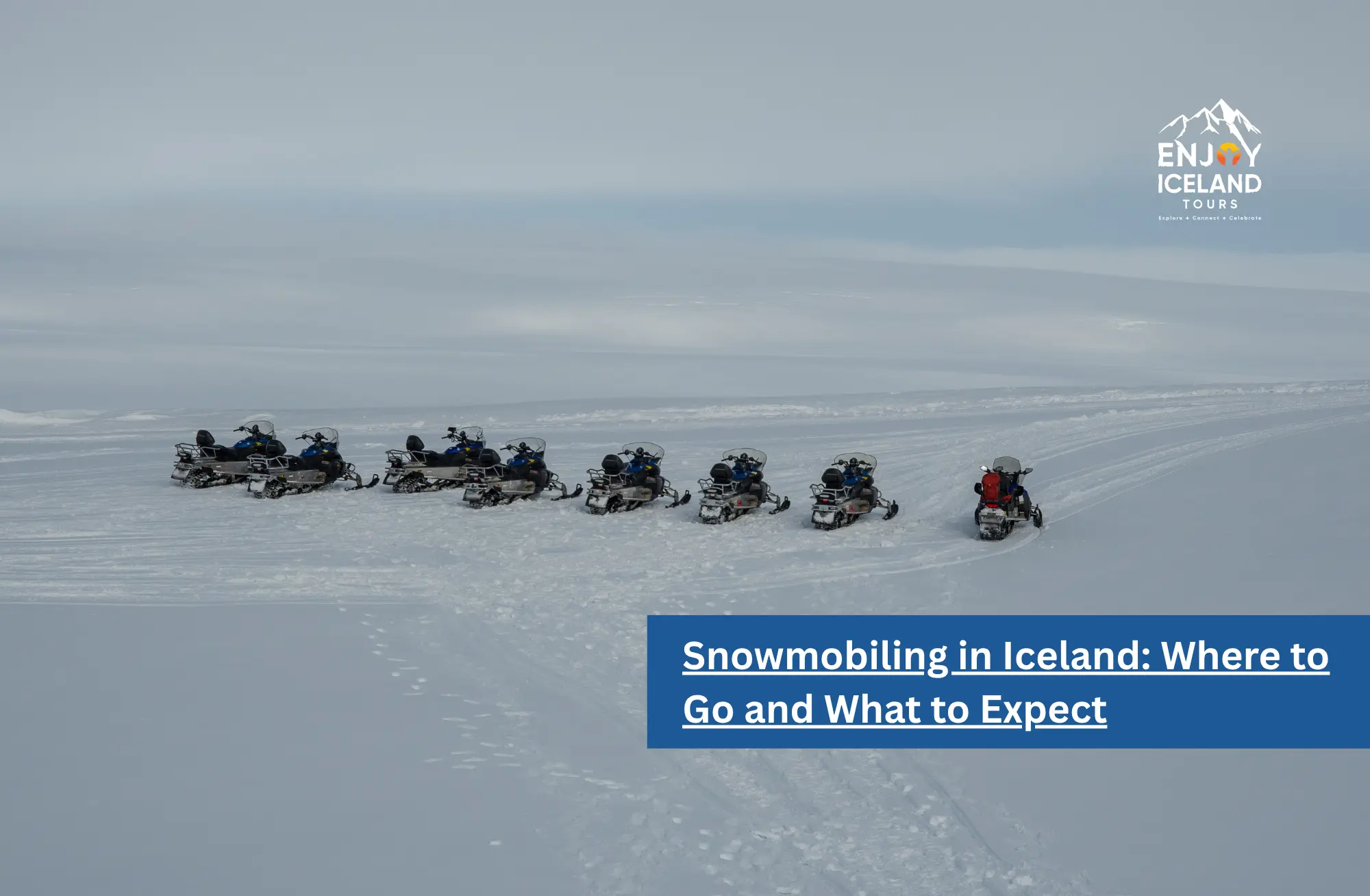
Snowmobiling in Iceland: Where to Go and What to Expect
Snowmobiling is one of the most popular winter activities in Iceland, and it is easy to see why. You ride across a glacier on a machine that does most of the hard work, with ice and sky in every direction. It is simpler to plan than most people think, but a few details decide how good the day is.
Quick answer: Snowmobile tours in Iceland run on glaciers, most commonly Langjökull (base camps in the Gullfoss area, close to the Golden Circle) and Mýrdalsjökull (on the south coast). Expect about an hour on the ice and roughly 2.5 to 4 hours in total from base camp, longer if you travel from Reykjavik. Overalls and helmets are provided, but boots often are not. Drivers need a full driving licence, and passengers can usually ride from around age 6 to 8, depending on the operator. Weather decides everything, so check the operator's rules and weather policy before you book.
Where Snowmobile Tours Run
Two glaciers account for most of the tours. Langjökull is the second largest ice cap in Iceland and sits inland. The main base camps are in the Gullfoss area, which makes it easy to combine with the Golden Circle route. Some tours offer pickup in Reykjavik, and others meet at a base near Gullfoss or Geysir. Mýrdalsjökull sits above the south coast, with a base camp at the foot of the glacier, which makes it a natural pairing with waterfalls and black sand beaches. Low cloud can hide the ice cap on some days. Both give you wide white plateaus and long views on a clear day. Which one suits you mostly depends on the rest of your itinerary and how much driving you want that day.
What a Typical Tour Looks Like
Most tours start at a meeting point or base camp, where you are given a warm overall and a helmet. Many operators also supply a balaclava, gloves or goggles, but check the list, because boots are often not included. A guide gives a short safety briefing and shows you the controls. Then the group rides in a line across the glacier, usually stopping for photos. The ride on the ice is typically about an hour. Allow roughly 2.5 to 4 hours in total at the base camp, and most of a day if the tour starts in Reykjavik, since the drive is part of it. Details vary by operator, so read the tour description carefully.
Who Can Ride
Rules differ between operators, so check the booking page. Drivers need a full, valid driving licence, and a motorcycle licence is not always enough. Operators generally set the minimum driving age at 17 or older. Most snowmobiles carry two people, with one driving and one riding as a passenger, and the passenger does not need a licence. Children can usually ride as passengers from around age 6 to 8, depending on the operator. If your group has an odd number of people, or someone wants to ride alone, book a single machine, which usually costs extra. Some tours add restrictions for pregnancy or certain health conditions. Ask before you book, especially if your group includes children, since this is the most common reason a booking needs to change.
What to Wear Underneath
The operator supplies the outer layer, but what you wear beneath it matters. Pack a warm base layer and a fleece, wool socks, and a hat that fits under a helmet. Bring waterproof, sturdy boots as well, since many operators do not provide them. Wind on a moving snowmobile is colder than standing still on the glacier. Our winter packing list for Iceland covers the full set.
Weather, Cancellations and Flexibility
Glacier weather can change quickly. Strong wind, low visibility or heavy snow can delay, shorten or cancel a tour, and operators put safety first. A tour can be called off even after you have left Reykjavik, so ask what the operator offers if that happens. Some operators offer the next available slot or a refund when they cancel for weather, but terms differ, so read them before you pay. That is why a rigid itinerary is the weak point. If you have one fixed day for snowmobiling and the weather turns, there may be no second chance. Leaving a spare day, or a backup plan in the same region, protects the trip. Our guide to winter driving in Iceland explains how road and weather conditions shape the day.
Combining a Glacier Ride With the Rest of Your Trip
A snowmobile ride works best as one highlight in a day, not the whole day. Around Langjökull you can pair it with the classic stops of the Golden Circle, and on the south coast you can pair it with waterfalls and beaches. A custom private tour can be planned around a glacier activity you have booked, with your own guide handling the driving, the timing and the other stops, so you only have to focus on the ride. If you prefer to see the main sights on a private day out instead, a private Golden Circle tour is the usual starting point.
When to Go
Glacier tours run through much of the year, but the feel changes with the season. Winter gives you short days and the best chance of crisp, snowy scenery, while spring and summer bring longer daylight and more flexibility on timing. If you are visiting in the dark months and also want to look for the aurora, you can read about the best time for the northern lights month by month and plan the ride for the day and the lights for the evening.
Is Snowmobiling Worth It?
For most travelers who enjoy being outdoors, yes. It is active without being hard, it gives you a glacier view you cannot get from the road, and it makes a great story. If you are cautious about cold, speed or heights, it may not be your favorite part of the trip, and there are gentler winter options. A good plan fits the activity to the group.
Frequently Asked Questions
Where can you go snowmobiling in Iceland?
The most common places are Langjökull, near the Golden Circle, and Mýrdalsjökull, on the south coast. Both have tours that run all year at the main operators, depending on glacier conditions.
How long is a snowmobile tour in Iceland?
The ride on the ice is typically about an hour. Allow roughly 2.5 to 4 hours in total at the base camp, and most of a day if the tour starts in Reykjavik. Check the exact timing with the operator.
Do you need a driving licence to snowmobile in Iceland?
Yes, if you want to drive. Operators require a full, valid driving licence for anyone driving a machine, and a motorcycle licence is not always accepted. Passengers can ride without one. Rules differ, so confirm before you book.
What should you wear for snowmobiling in Iceland?
The operator provides overalls and a helmet, and usually a balaclava plus gloves or goggles. Boots are often not included, so bring waterproof boots. Wear a warm base layer, a fleece, wool socks and a hat that fits under the helmet.
What happens if the weather is bad?
Tours can be delayed, shortened or cancelled for wind, low visibility or heavy snow. Ask the operator about its weather policy before you book, and keep a spare day or a backup plan in the same region.