


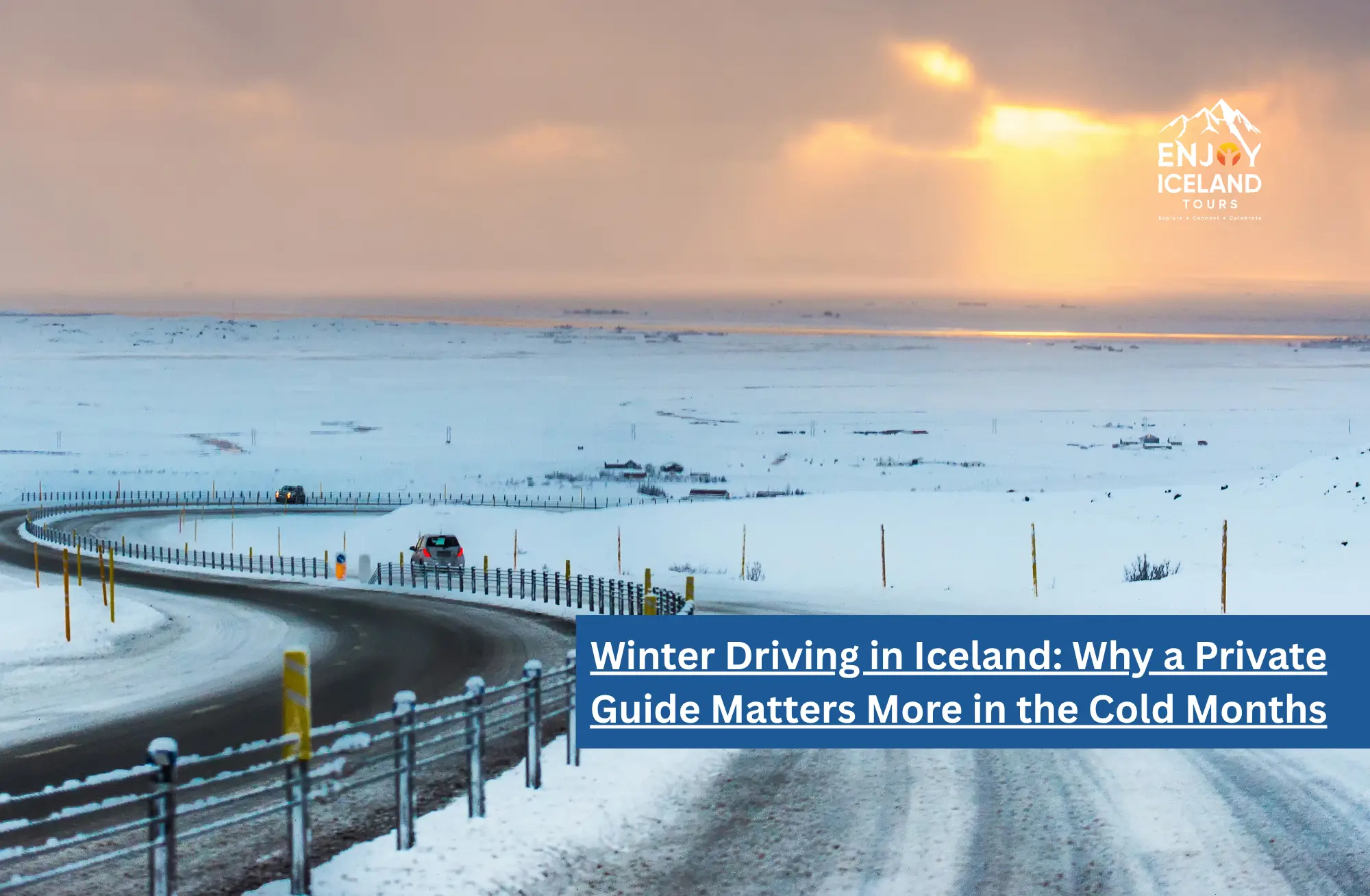
Winter Driving in Iceland: Why a Private Guide Matters More in the Cold Months
Summer driving in Iceland and winter driving in Iceland are close to two different activities wearing the same name. The roads are the same routes, but ice, wind, and daylight change what a normal day on the Ring Road or Golden Circle actually requires.
Quick answer: Winter driving conditions in Iceland include ice, snow, high winds, and roads that can close on short notice, all against a backdrop of only a few hours of daylight. Self driving in winter is possible but requires real experience with these conditions, since weather can change faster than a visitor unfamiliar with Iceland's roads can safely react to. A private guide who drives these roads year round removes that risk while also handling the route planning around whatever the day's conditions actually are.
What Makes Icelandic Winter Roads Different
Ice is the most obvious hazard, but wind is arguably the more dangerous one, since Iceland regularly sees gusts strong enough to make vehicle control genuinely difficult, especially on exposed stretches near the coast or in open lowland areas. Black ice, a thin, often invisible layer that forms on road surfaces, is another hazard that catches visitors off guard, since it can look identical to a wet but otherwise normal road.
Road Closures Happen With Little Warning
Iceland's road administration, Vegagerdin, closes sections of road when conditions become unsafe, and these closures can happen with only a few hours of notice as a storm moves in. A route that was fully open in the morning can be partially closed by afternoon. Visitors driving themselves need to check road status regularly throughout the day, something a guide who does this daily is already doing as a matter of course.
Daylight Limits What You Can Actually Cover
Winter daylight in Iceland runs as short as four to five hours around the darkest point of the year, and that compresses everything about a day's driving. A route that would be comfortable in June, with nearly endless daylight to work with, needs to be planned much more carefully in December or January, when getting caught on an unfamiliar road after dark adds a layer of difficulty a summer visitor never has to think about.
Why Local Experience Matters More Here Than in Summer
A guide who drives these specific roads through the winter builds a kind of judgment that is hard to get any other way, reading how a road is likely to behave based on wind direction, recent snowfall, or temperature swings through the day. This is less about defensive driving technique in the abstract and more about knowing this particular stretch of coastal road, or this specific mountain pass, and what it tends to do under these specific conditions.
Vehicle and Tire Considerations
Properly fitted winter tires are required during Iceland's winter tire period and genuinely necessary for winter driving conditions, and a well maintained 4x4 vehicle handles conditions that a standard rental car can struggle with. This is one of the areas where a private tour removes a layer of risk and decision making that a self drive visitor has to take on themselves, on top of everything else about navigating unfamiliar winter roads.
Planning a Winter Trip Around These Realities
None of this is meant to discourage a winter visit. Iceland in winter is one of the most rewarding times to see the country, it just changes what a well planned day looks like. A private Golden Circle tour or a longer custom private tour built around a guide who is already reading road and weather conditions daily removes the guesswork that self driving in winter otherwise demands. For more on what a specific winter month actually looks like, our Iceland in December guide covers weather and daylight in more detail.
Frequently Asked Questions
Is it safe to rent a car and self drive in Iceland during winter?
It is possible with real winter driving experience, proper tires, and careful attention to daily road and weather updates. Visitors without experience in icy, high wind conditions take on meaningfully more risk than they might realize.
How often do roads close in Iceland during winter?
Closures happen regularly during storm systems, sometimes with only a few hours of notice. Checking road status through the day, not just before setting out, matters during winter months.
What is black ice and why is it dangerous?
Black ice is a thin, often nearly invisible layer of ice on the road surface that can look like an ordinary wet road. It significantly reduces tire grip and can be particularly hazardous because drivers may not see it until they are already on the icy surface.
How much daylight do you have for driving in Icelandic winter?
As little as four to five hours around the darkest point of the year in December, which meaningfully limits how much ground a day's itinerary can safely cover.
Do I need a 4x4 vehicle for winter driving in Iceland?
A well maintained 4x4 with proper winter tires can provide additional traction and capability in snow and difficult road conditions, although it does not eliminate the risks of ice, wind, or poor visibility.