


Iceland in Summer vs Winter 2025: How to Choose the Right...
Iceland in Summer vs Winter: Which Season Is Right for You?
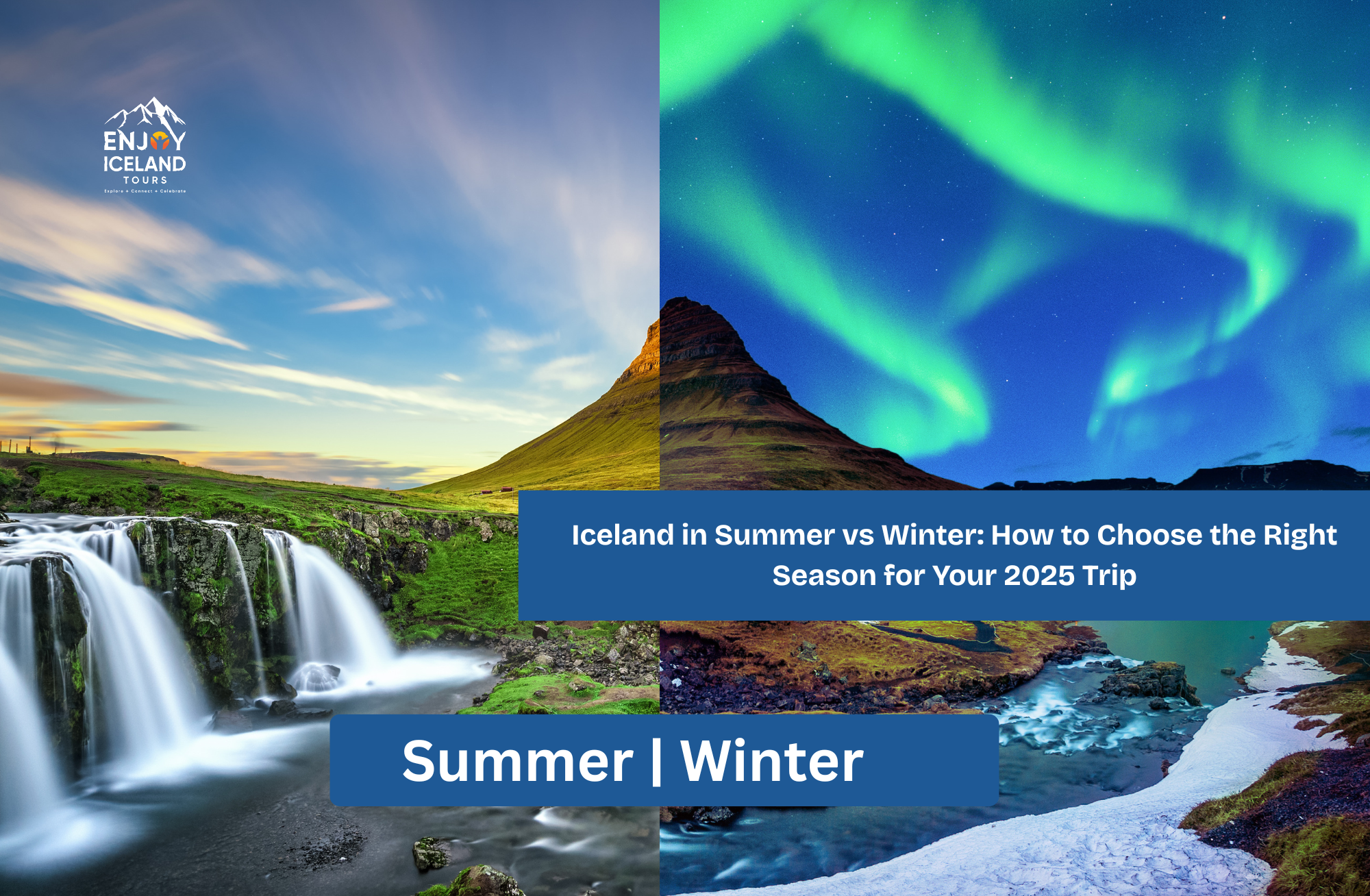
Iceland changes completely depending on when you visit. Summer brings nearly endless daylight, green landscapes, and easy access to the highlands. Winter brings the northern lights, snow covered scenery, and a much quieter country. Neither season is objectively better. It depends on what you want out of the trip.
Quick answer: Summer in Iceland (June to August) means 20 plus hours of daylight, mild temperatures around 10 to 15 degrees Celsius, and full access to the highlands and remote roads. Winter (November to March) brings short days, snow, ice, and the best chance of seeing the northern lights, along with lower prices and fewer crowds. Most first time visitors do well in summer for ease of travel, while returning visitors and northern lights seekers usually prefer winter.
What Summer in Iceland Is Like
Summer runs roughly from June through August, and it is Iceland's most popular travel season. Daylight stretches to nearly 24 hours around the summer solstice, which means there is effectively no rush to fit everything into a short window. Temperatures usually sit between 10 and 15 degrees Celsius, occasionally warmer on a calm day, and the countryside turns green with wildflowers along the lowlands.
This is also the only time of year when the F roads into the highlands, places like Landmannalaugar and Thorsmork, are reliably open. If a highlands trip is on your list, summer is really the only practical window.
Pros of Visiting in Summer
- Long daylight hours give you flexibility on when to visit each site
- Highland roads and remote areas are open and accessible
- Mild, comfortable weather for hiking and outdoor activities
- Puffins and other wildlife are present along the coast
What to Watch Out For
- The most popular sites get crowded, especially midday
- Accommodation prices are at their highest
- No realistic chance of seeing the northern lights, the sky never gets dark enough
What Winter in Iceland Is Like
Winter runs from November through March, and it is a different country entirely. Daylight is short, sometimes only four to five hours around the December solstice, and the landscape is covered in snow and ice. Temperatures typically range from freezing down to around minus 5 degrees Celsius near the coast, colder inland.
The tradeoff for the short days is the northern lights. Winter's long dark skies give you the best odds of seeing them, especially away from the light pollution around Reykjavik (Icelandic: Reykjavík). Ice caves also become accessible during winter, when the glacier tunnels are stable enough to enter safely with a guide. Our guide to booking an ice cave tour covers timing and locations in more detail.
Pros of Visiting in Winter
- Best chance of the year to see the northern lights
- Access to natural ice caves under Vatnajokull (Icelandic: Vatnajökull)
- Fewer crowds at major sites, and lower accommodation prices
- Dramatic, snow covered scenery
What to Watch Out For
- Short daylight hours limit how much you can fit into a day
- Highland roads and many F roads are closed
- Driving conditions can be difficult, ice and snow require caution
- Weather changes quickly and can cancel or reroute plans
Comparing Key Travel Factors
| Factor | Summer | Winter |
|---|---|---|
| Daylight | Up to 24 hours in June | As little as 4 to 5 hours in December |
| Average temperature | 10 to 15 degrees Celsius | Around freezing to minus 5 degrees Celsius |
| Northern lights | Not visible, sky stays too bright | Best chance of the year |
| Highland access | Open, F roads accessible | Closed |
| Crowds | Busiest time of year | Quiet, especially outside holidays |
| Prices | Highest of the year | Lower, especially outside Christmas and New Year |
| Ice caves | Not accessible | Accessible with a certified guide |
Choose Summer If
- You want long daylight hours and flexible scheduling
- A highlands trip to places like Landmannalaugar is on your list
- You prefer mild weather for hiking and outdoor time
- This is your first visit and you want easier driving conditions
Choose Winter If
- Seeing the northern lights is a priority
- You want to visit natural ice caves
- You prefer fewer crowds and lower prices
- You have visited before and want a different side of Iceland
Making the Most of Either Season
Whichever season you choose, a private tour gives you the flexibility to work around the conditions of that time of year, whether that means chasing clear skies for the northern lights in winter or beating the crowds to a popular stop in summer. Enjoy Iceland Tours runs private tours built around your dates and priorities rather than a fixed group schedule, and if you are planning around the aurora specifically, our northern lights tours page has more detail on timing and odds.
There is no wrong season to visit Iceland. Summer and winter simply offer two very different versions of the same country, and both are worth experiencing in their own right.
Frequently Asked Questions
Is it better to visit Iceland in summer or winter?
Neither season is objectively better. Summer suits travelers who want long daylight, mild weather, and highland access, while winter suits those chasing the northern lights, ice caves, and lower prices.
Can you see the northern lights in Iceland in summer?
No. The sky stays too bright throughout summer for the aurora to be visible. You need the long dark nights of winter, roughly September through April.
Is driving in Iceland harder in winter?
Yes. Winter roads can be icy or snow covered, and conditions change quickly. Many F roads and highland routes close entirely for the season.
Which season has fewer tourists?
Winter is noticeably quieter than summer, especially outside the Christmas and New Year period.
What is the weather actually like in each season?
Summer averages 10 to 15 degrees Celsius with mild conditions. Winter ranges from around freezing to minus 5 degrees Celsius near the coast, colder inland.