


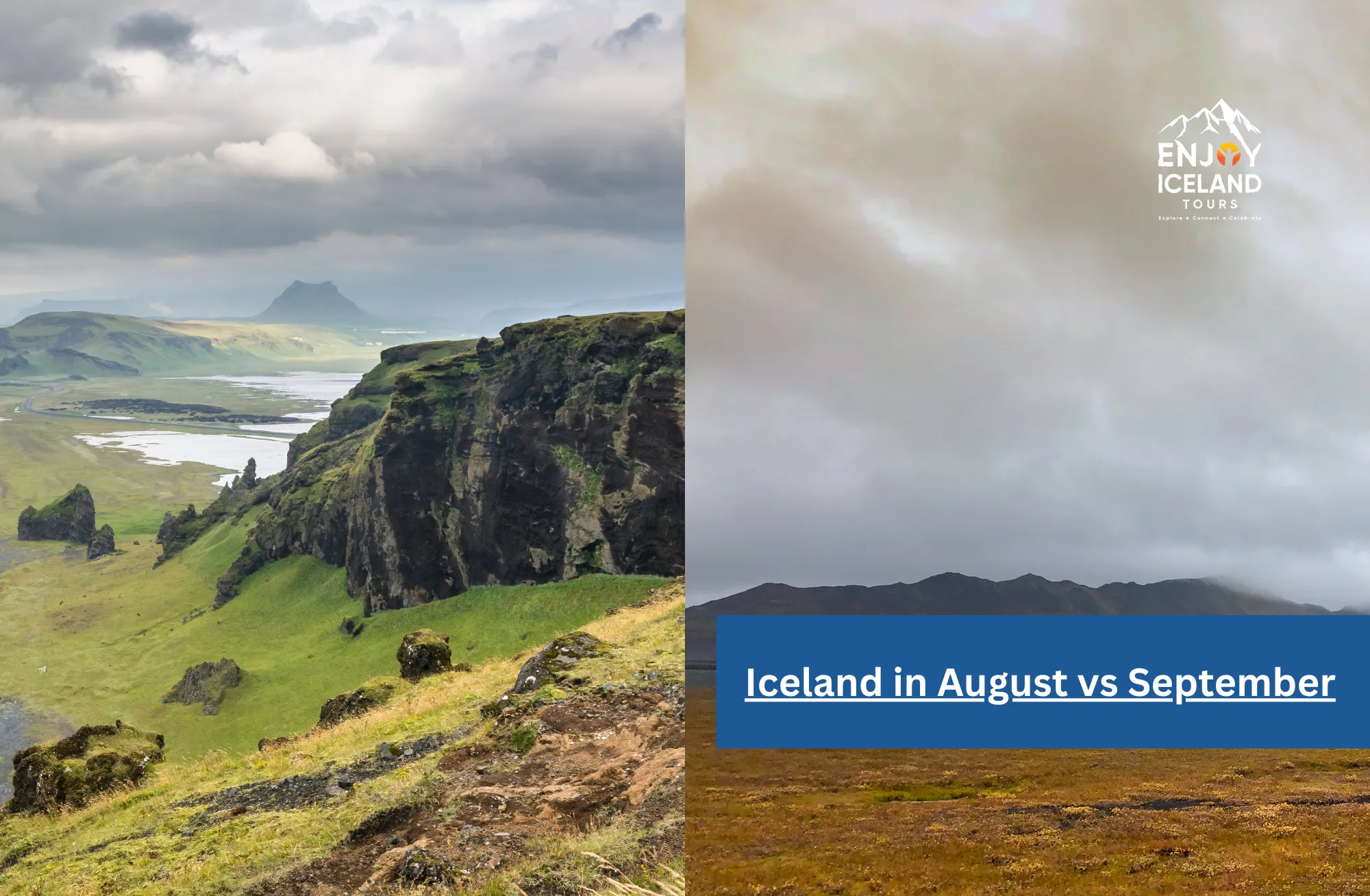
Iceland in August vs September
August and September sit right next to each other on the calendar, but they feel different enough in Iceland that the choice is worth thinking through rather than picking whichever fits your schedule. Here's how they actually compare.
Quick answer: August has longer daylight, warmer weather, and full highland access, but bigger crowds and higher prices. September brings noticeably thinner crowds, cooler weather, and much better odds for the northern lights, though the highland season starts narrowing as the month goes on. If aurora viewing matters most, lean September; if daylight and highland access matter most, lean August.
Iceland Weather: August vs September
Weather wise, the two months are closer than you'd expect. August tends to be marginally warmer and slightly drier, but the gap isn't dramatic. Both months sit in Iceland's mild, changeable shoulder territory rather than anything extreme. September starts to lean more toward autumn by its second half, with a better chance of a properly wet, windy day, but early September often still feels a lot like late August.
Crowds in August vs September
Crowds are where the two months diverge more clearly. August is still peak season, especially in the first three weeks, with full parking lots at major sites and a real need to book ahead for tours, restaurants, and accommodation. September sees a noticeable drop off as the month goes on, particularly after the first week or two, once school schedules pull a lot of summer travelers back home. If avoiding crowds matters to you, September has the edge, especially the back half of the month.
Northern Lights: August vs September
Daylight and darkness are the other big variable, and this one actually flips depending on what you're after. August still has long evenings, especially early in the month, which suits travelers who want to pack a lot into each day. September brings real darkness back at night, which is exactly what you need for Northern Lights viewing. If aurora chasing is a priority, September is the stronger month by a meaningful margin over August, since you get darker skies for more hours and generally better odds than the tail end of August offers.
Which Month Is Better for Your Iceland Trip
Pricing follows the crowd pattern to some extent. August, as peak season, tends to carry higher accommodation rates and tighter availability, particularly around the Culture Night weekend in Reykjavik (Icelandic: Reykjavík). September starts to ease off, especially once you're past the first week or two, which can make a real difference on a longer trip.
For highland access, both months can work, but the window is narrower in September as roads start closing depending on weather, while August still sits comfortably in the middle of the accessible season. If a highland day is central to your plans, August carries less risk of a route being closed by the time you arrive.
If your trip is built around daytime touring, Golden Circle and South Coast sights, wildlife, general sightseeing, either month works well and the differences are minor. If northern lights are the main goal, lean September. If you want maximum daylight and don't mind the crowds and higher prices, lean August, ideally the first half.
There's no wrong answer here, both months are solid choices for an Iceland trip. It really comes down to whether darkness or daylight, and crowds or cost, matter more to what you're planning to do.
Frequently Asked Questions
Is August or September better for visiting Iceland?
It depends on priorities. August has more daylight, milder weather, and full highland access. September has fewer crowds, lower prices, and much better northern lights odds.
Which month is better for seeing the northern lights, August or September?
September, by a meaningful margin. It offers darker skies for more hours than late August.
Are the Iceland highlands accessible in both August and September?
August sits comfortably in the middle of the accessible season. September's window narrows as the month goes on, and roads can start closing depending on weather.