


Snæfellsnes Peninsula: Why It's Called "Iceland in Miniature"
Snæfellsnes Peninsula: Why It's Called "Iceland in Miniature"
The Snæfellsnes Peninsula comes up constantly when travelers ask what to add to an Iceland itinerary beyond the Golden Circle, and the nickname attached to it, "Iceland in Miniature," gets used so often it's worth explaining what it actually means and whether it's accurate.
Quick answer: The Snæfellsnes Peninsula earns the nickname "Iceland in Miniature" because it packs a glacier-capped volcano, black sand beaches, fishing villages, lava fields, and dramatic coastline into a single peninsula roughly two hours from Reykjavík. Unlike the Golden Circle or South Coast, which each focus on a narrower set of landscapes, Snæfellsnes gives visitors a condensed sample of nearly everything Iceland is known for in one day trip.
What Makes Snæfellsnes Different From the Golden Circle or South Coast
The Golden Circle centers on geothermal activity and waterfalls close to Reykjavík. The South Coast focuses on longer stretches of black sand coastline and glacier views further from the city. Snæfellsnes doesn't fit neatly into either category, and that's the point. In one drive, it moves through volcanic landscape, coastal cliffs, small fishing harbors, and a genuine glacier, all within a peninsula small enough to cover without an overnight stay. For travelers with limited time who still want variety rather than one dominant landscape type, Snæfellsnes covers more visual range per hour than either of the other two routes.
Snæfellsjökull: The Glacier That Gives the Peninsula Its Name
The peninsula takes its name from Snæfellsjökull, a glacier-capped stratovolcano sitting at the western tip. It's visible from a wide stretch of the peninsula on a clear day, and it's the landscape feature most people picture when they think of Snæfellsnes photos. The volcano is also the setting Jules Verne used as the entry point in Journey to the Center of the Earth, which gives it a bit of literary reputation beyond its natural one.
Kirkjufell: The Peninsula's Most Photographed Mountain
Kirkjufell, meaning "church mountain," has become one of the most photographed single mountains in Iceland, largely because of its distinctive, near symmetrical shape rising alone above the coastline. It's often paired in photos with a nearby waterfall in the foreground, and it's one part of a much larger peninsula rather than the only reason to visit.
Arnarstapi and the Coastal Lava Cliffs
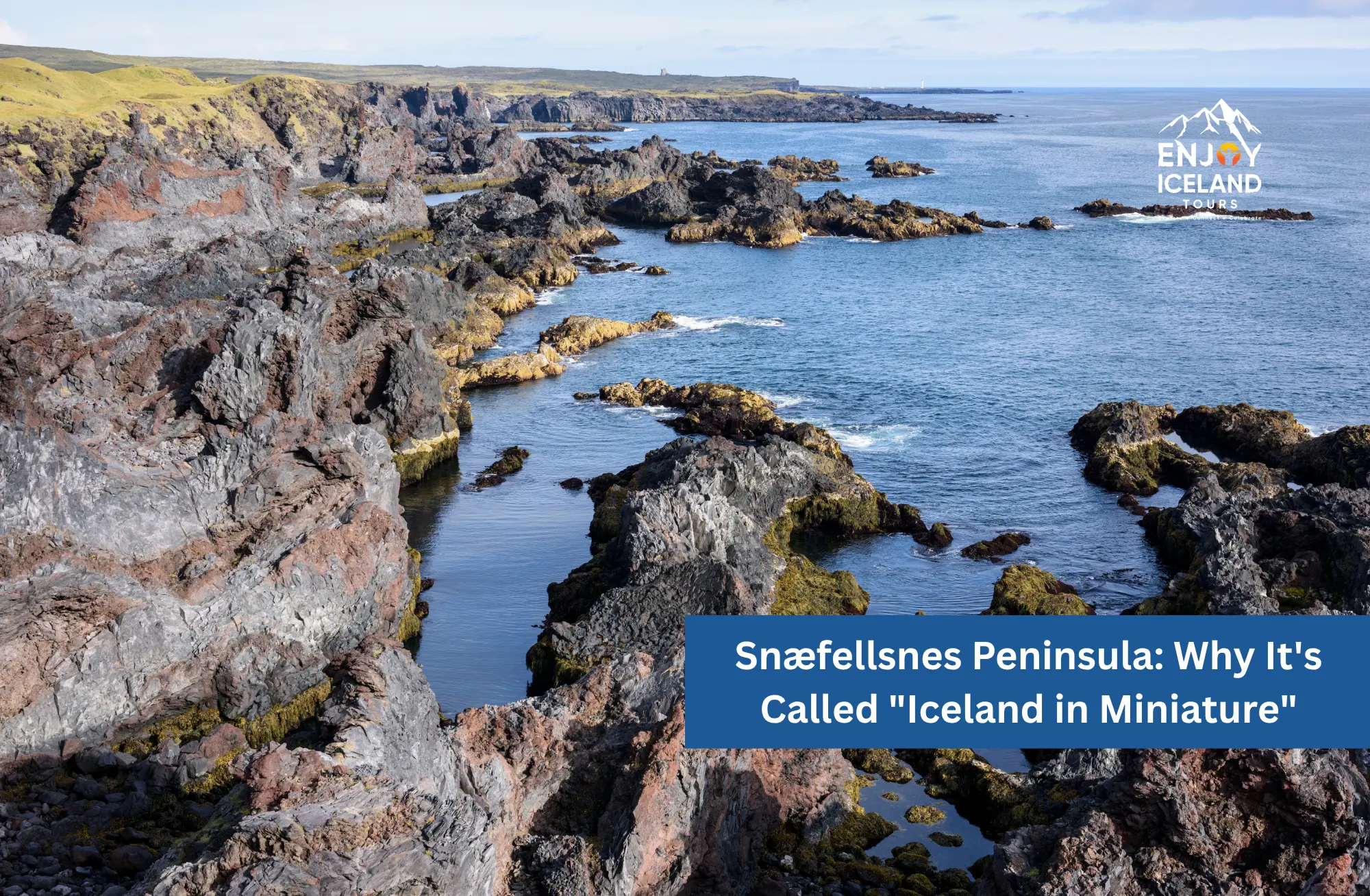
Along the southern coast of the peninsula, Arnarstapi offers a walkable stretch of lava rock cliffs, sea arches, and nesting seabirds in season. It's a quieter stop than Kirkjufell, and it shows how the peninsula's coastline formed from volcanic activity rather than the gentler erosion seen elsewhere in Iceland.
Ytri-Tunga and the Black and Golden Sand Beaches
Ytri-Tunga is one of the few beaches in Iceland where seals regularly come ashore, and it makes for a quieter, wildlife-focused stop compared to the peninsula's more dramatic coastal scenery. Further along, Djúpalónssandur adds a black sand beach backed by lava rock formations, giving the peninsula its own version of the black sand coastline more commonly associated with the South Coast, with far fewer visitors.
Búðir Church and the Peninsula's Older History
Búðir church, a small black wooden church rebuilt in 1987 on a site where a church has stood since the early 1700s, sits on the coast as a reminder of how long people have lived and worked along this stretch of Iceland, long before it became a scenic drive for visitors.
How Snæfellsnes Compares as a Day Trip Choice
For a first Iceland trip with only one or two day trip slots available, the Golden Circle usually makes sense as the more essential, easily accessible choice. For a second or third day trip, or for travelers who want coastal and volcanic scenery in a single route without an overnight stay, Snæfellsnes is worth prioritizing over a second, more crowded South Coast style day. A private Snæfellsnes tour lets you set the pace for a peninsula with this much variety, spending more time at whichever stop catches your interest rather than working through a fixed schedule built for a full bus. If your trip has room for more than one day trip, pairing Snæfellsnes with a Golden Circle tour gives a genuinely different landscape each day rather than overlapping scenery.
Frequently Asked Questions
Why is Snæfellsnes called "Iceland in Miniature"?
Because it combines a glacier-capped volcano, black sand beaches, coastal cliffs, lava fields, and fishing villages within a single peninsula, giving visitors a condensed sample of the landscape types found across the rest of Iceland.
How far is Snæfellsnes from Reykjavík?
The peninsula is roughly a two-hour drive from Reykjavík, making it accessible as a single day trip without an overnight stay.
Is Snæfellsnes better than the Golden Circle?
They're different rather than directly comparable. The Golden Circle focuses on geothermal activity and waterfalls close to Reykjavík, while Snæfellsnes offers a wider mix of coastal, volcanic, and glacier scenery further from the city. Many travelers with time for more than one day trip do both.
What is Kirkjufell and why is it famous?
Kirkjufell is a distinctively shaped, near symmetrical mountain on the Snæfellsnes coastline. It has become one of Iceland's most photographed single mountains, often shown with a nearby waterfall in the foreground.
Can Snæfellsnes be done in one day?
Yes. It's a common single day trip from Reykjavík, though the peninsula has enough to see that a private tour with a flexible pace covers it more comfortably than a fixed schedule built for a full group.