


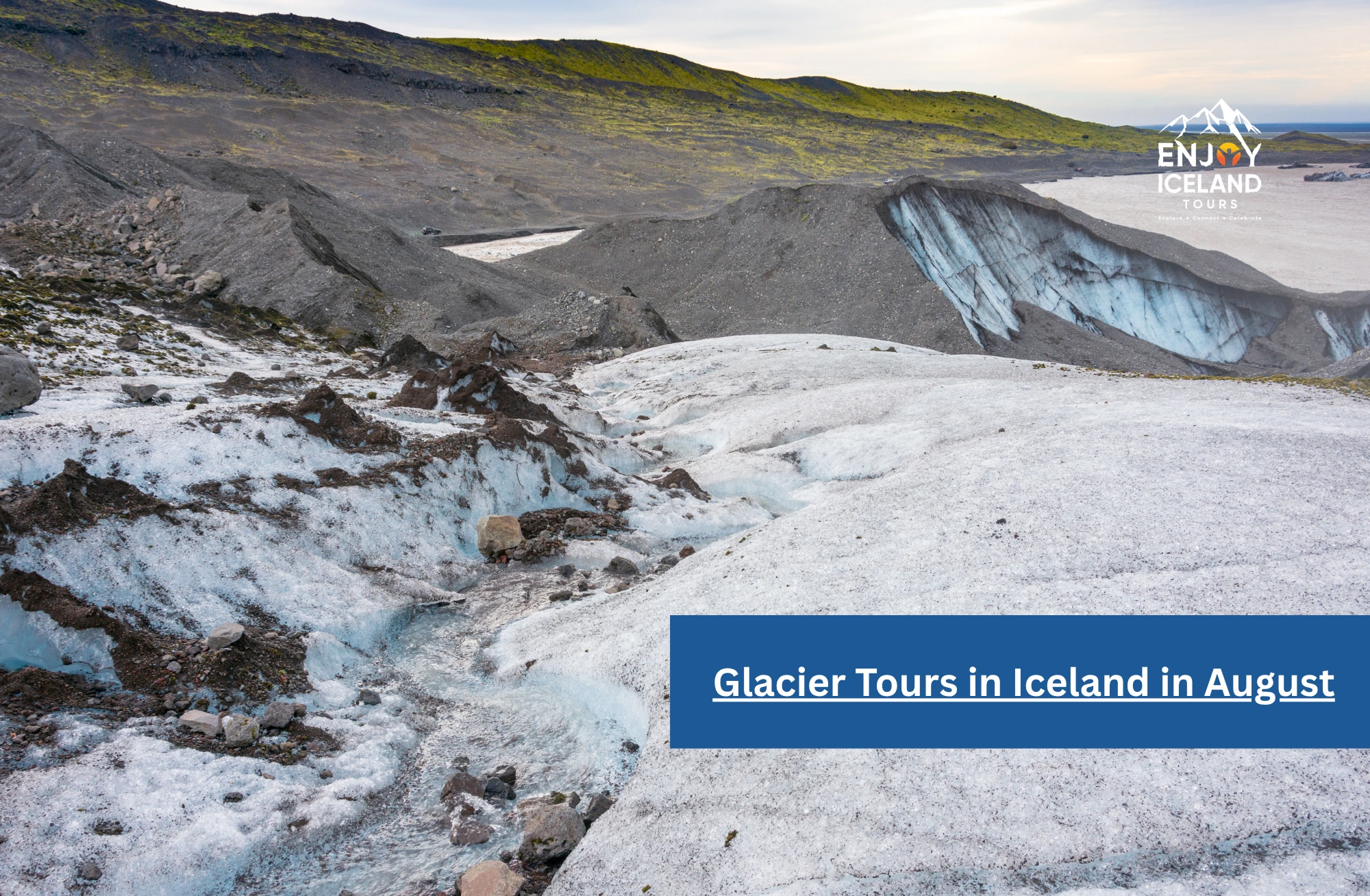
Glacier Tours in Iceland in August
Glaciers are a year-round feature of the Icelandic landscape, but what you can actually do on one changes a fair amount depending on the season, and August sits in a specific part of that calendar worth understanding before you book anything.
Quick answer: Glacier hiking is open and generally considered safer in August than in winter, since there is no snow hiding crevasses. The famous blue ice caves are the opposite story: those are a winter-only experience, typically accessible from around November through March, and are closed by August due to summer melt.
Glacier Hiking in Iceland in August
Glacier hiking, walking on the ice itself with crampons and a guide, runs through summer and is generally considered safer and more accessible in August than in winter, since there's no snow cover hiding crevasses and conditions tend to be more stable underfoot. If a glacier walk is on your list, summer months including August are actually the better window for it compared to the depths of winter.
Are Ice Caves Open in August?
Ice caves are the opposite story. The vivid blue ice caves Iceland is known for in photos are almost entirely a winter phenomenon, typically accessible from around November through March, when cold temperatures keep the ice structurally stable enough to enter safely. By August, those specific caves are closed for the season, since summer melt makes them unstable and unsafe to enter. Our guide to Iceland's ice caves covers that winter window in more detail if it's the experience you're after. If blue ice caves are the main reason for your trip, this is worth knowing early, since August simply isn't the season for that particular experience, and a winter trip is the only real way to see them.
Vatnajokull Glacier Tours and Viewpoints
What does work well in August is the broader glacier landscape itself: viewpoints, glacier lagoons, and guided walks onto the accessible parts of the ice. Vatnajokull (Icelandic: Vatnajökull), Europe's largest glacier by volume, anchors a lot of this activity along the southeast, with several operators running guided walks throughout summer when conditions allow.
If a glacier experience is part of your trip, it's worth building it into a longer route rather than trying to add it onto a standard Golden Circle or South Coast day, since most accessible glacier areas sit further east than either of those routes typically covers. A multi-day tour gives you the room to include a proper glacier day alongside the more classic stops, without trying to cram everything into a single long drive.
Planning a Glacier Day: Weather and Packing Tips
Weather is the main variable to plan around. Glacier hiking tours in August generally proceed as scheduled since conditions are milder than winter, but operators do occasionally adjust or cancel for wind or visibility, so it's worth keeping a flexible day nearby if a glacier walk is a priority rather than scheduling it for your very last possible day in the country.
Dress warmer than the weather in Reykjavik (Icelandic: Reykjavík) suggests. Glaciers generate their own cold microclimate regardless of the season, and even on a mild August day elsewhere, it's noticeably colder standing on the ice itself. Proper footwear, warm layers, and gloves are standard advice even in summer.
If your priority is genuinely the blue ice caves rather than glacier hiking in general, it's worth being upfront about that when planning, since it may mean looking at a winter trip instead of, or in addition to, an August visit.
Frequently Asked Questions
Can you go glacier hiking in Iceland in August?
Yes. Glacier hiking runs through summer and is generally considered safer and more accessible in August than in winter, since there is no snow cover hiding crevasses.
Are the blue ice caves open in August?
No. The blue ice caves are typically accessible from around November through March. By August, summer melt makes them unstable and they are closed for the season.
What is the difference between glacier hiking and ice cave tours?
Glacier hiking is walking on the ice surface with crampons and a guide, available in summer. Ice cave tours go inside stable winter-formed caves, only available roughly November through March.