


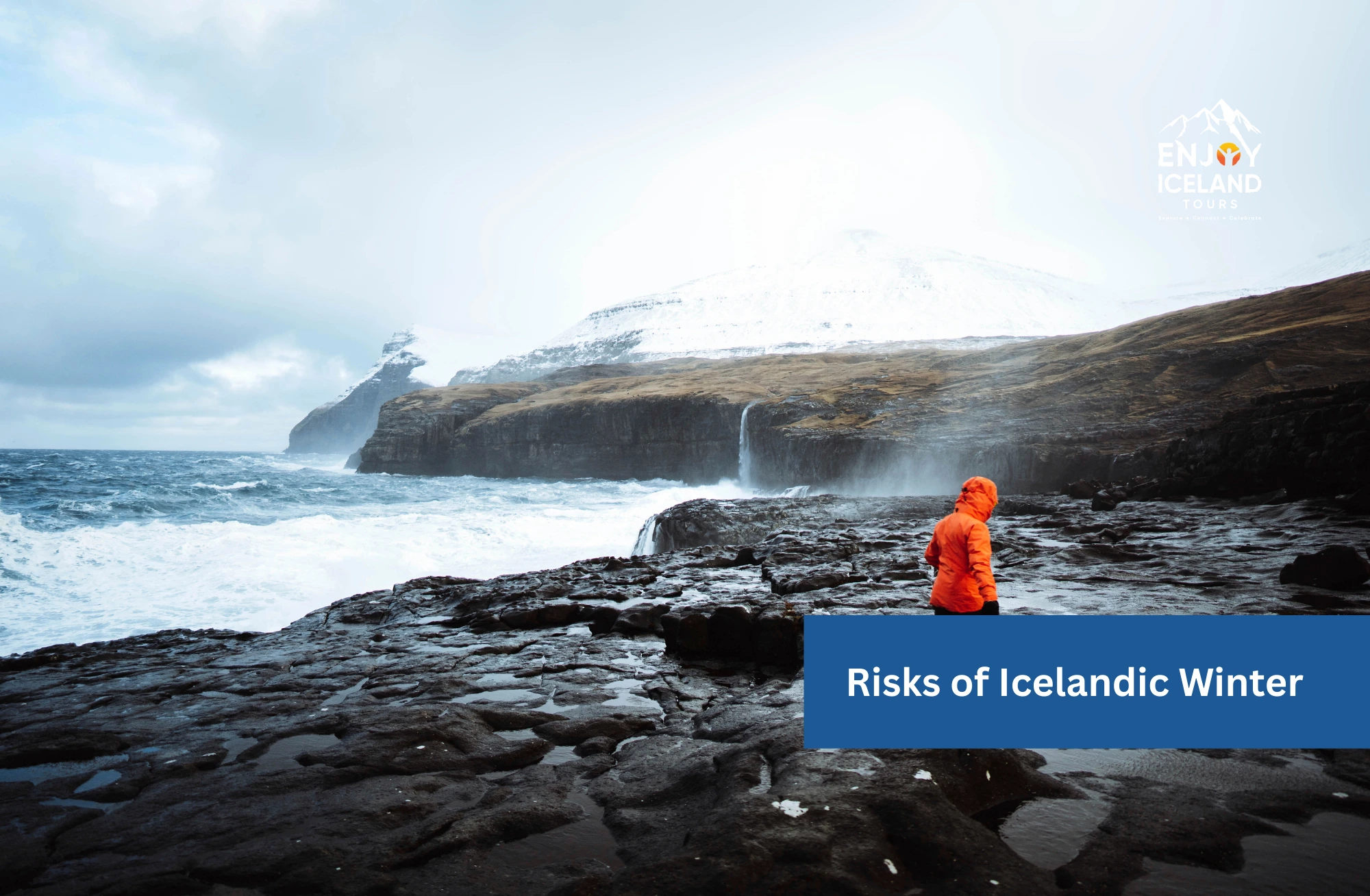
Understanding the Risks of Icelandic Winter Driving 2026 Guide
I. Understanding the Risks of Icelandic Winter Driving
Volatile Weather and Wind
Wind is often a greater hazard than snow during Icelandic winters. Sudden gusts, especially in open landscapes and coastal areas, can affect vehicle control and make steering unpredictable. Strong winds can also make opening car doors dangerous. Weather conditions can change rapidly, turning a manageable drive into a hazardous one within minutes.
Invisible Ice (Black Ice)
Black ice, known locally aslaunhalt, commonly forms on bridges, shaded roads, and paved highways. Roads may appear clear while remaining dangerously slippery. This significantly increases braking and cornering risks, particularly for drivers unfamiliar with winter driving conditions.
Limited Visibility
In midwinter, daylight is limited to approximately 4-5 hours per day. Outside these hours, drivers often face darkness combined with snow, fog, or blowing snow. Whiteout conditions can occur, reducing visibility to the point where road markers and other vehicles are difficult to see.
Isolation and Sparse Services
Outside Reykjavik and major towns, services are limited. During storms or road closures, long distances between fuel stations, reduced mobile coverage, and limited roadside assistance increase the risks of winter driving.
II. Essential Rules and Regulations for 2026
Winter Tires
Mandatory from November 1 to April 15. Studded tires are strongly recommended for icy conditions, particularly outside urban areas.
Headlights at All Times
Headlights must be switched on at all times, day or night. Automatic daytime lights alone do not meet Icelandic legal requirements.
Speed Limits
- 90 km/hon paved roads
- 80 km/hon gravel roads
- 50 km/hin towns
These are maximum limits. During winter, speeds should be reduced based on ice, wind, and visibility conditions.
Road Closures
\"Lokath\" means closed. Never bypass road closure signs. Closures are common during storms, including on sections of the Ring Road. Highland F-roads remain closed throughout winter.
Strict Prohibitions
Off-road driving is illegal and unsafe. Stopping on the roadside for photos is also prohibited, especially in low-visibility conditions.
III. Why Guided Winter Tours Matter
For many travelers, guided winter tours provide a safer and more manageable alternative to self-driving.
- Safety and Skill:Local guides are trained to handle wind, ice, and rapidly changing road conditions using 4x4 vehicles.
- Real-Time Adaptability:Guides monitor official sources such as Road.is and Vedur.is and adjust routes as conditions change.
- Stress-Free Viewing:Travelers can enjoy glaciers, waterfalls, and Northern Lights without the distraction of winter driving risks.
- Local Insight:Guides provide cultural context and access to safe viewpoints beyond what navigation apps typically suggest.
Frequently Asked Questions (FAQs)
Do I need a 4x4 for winter driving in Iceland?
+
Not on all roads, but a 4x4 is strongly recommended for improved control on snow and ice.
What should I do if I get stuck in a storm?
+ Stay with your vehicle to reduce hypothermia risk and call 112 in an emergency.
Are all roads open in winter?
+ No. Most F-roads are closed, and even major routes may close during severe weather.
Can I see the Northern Lights while driving?
+ Stopping or watching auroras while driving is dangerous. Guided Northern Lights tours are the safest option.
V. Conclusion
Winter driving in Iceland presents clear challenges, including strong winds, hidden ice, limited daylight, and periodic road closures. Travelers with limited winter driving experience should carefully assess these risks and consider guided winter tours. Always consult SafeTravel.is, monitor official weather updates, and respect the realities of Iceland's winter conditions.