


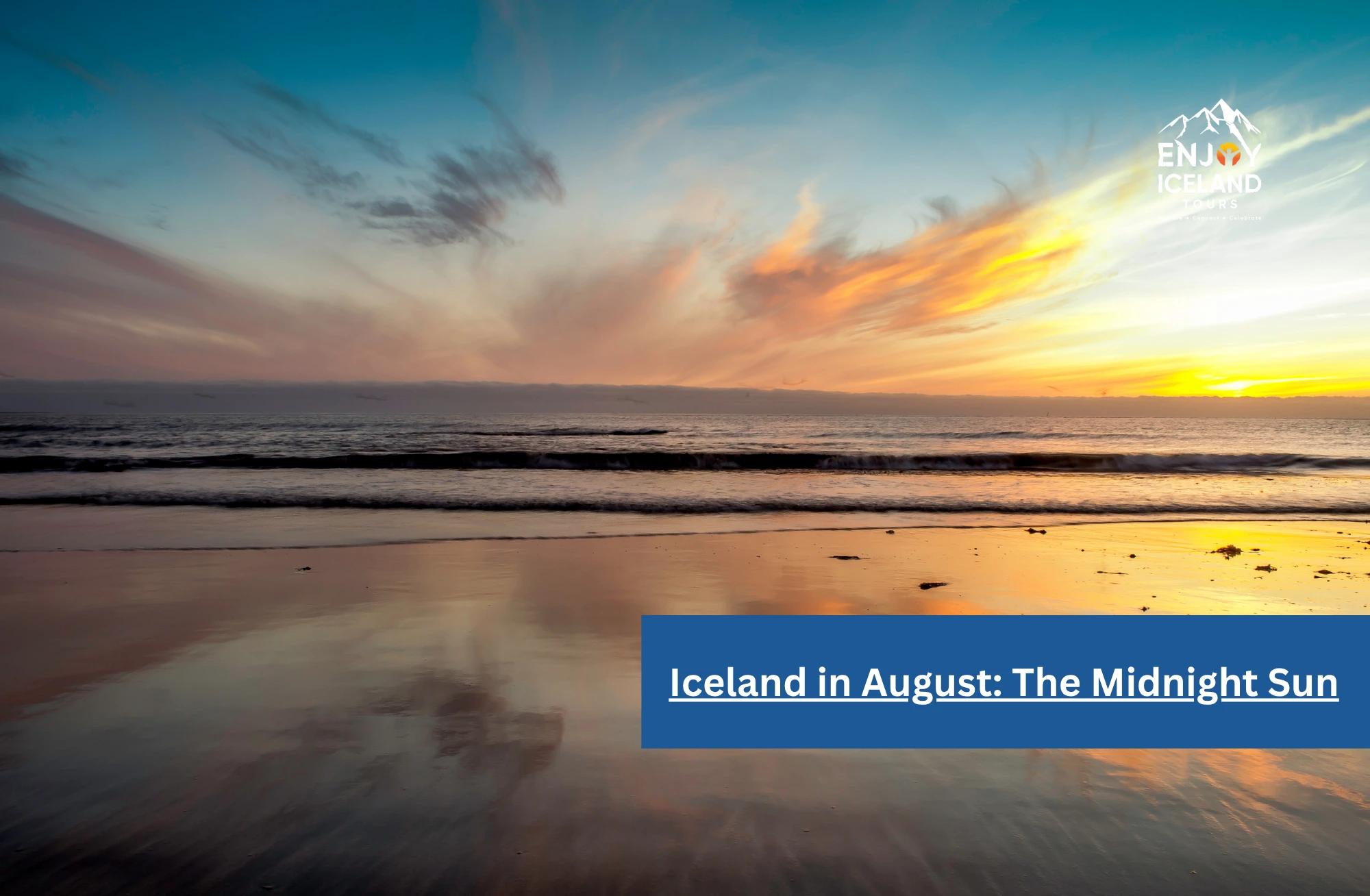
Iceland in August: The Midnight Sun
Iceland's true midnight sun, the sun staying above the horizon all night, belongs to June. By August, that's over, but what's left is still remarkable if you're used to normal daylight hours further south. On August 1, the sun sets in Reykjavik (Icelandic: Reykjavík) around 10:31 p.m., giving close to 18 hours of daylight, and it doesn't get properly dark until well past that. By August 31, sunset has moved up to around 8:47 p.m. closer to 14.5 hours of daylight, and you'll start to see real darkness again for the first time since spring.
Quick answer: Iceland's true midnight sun (the sun never setting) ends in June. By August the sun does set, moving from around 10:31pm on August 1 to about 8:47pm on August 31, still giving 14.5 to 18 hours of daylight depending on the week. Early August keeps the long evenings; late August starts bringing back real darkness, which is exactly what you need for the first northern lights chances of the season.
Midnight Sun and Daylight Hours in August
That shift matters more than it sounds like it should for trip planning. In early August, you can realistically fit a full day tour and still have hours of usable light afterward for a walk around Reykjavik (Icelandic: Reykjavík) or a stop at a geothermal pool. By late August, evenings start closing in earlier, which is actually good news if you're hoping to catch the northern lights, since you need real darkness for that.
Best Time in August for Long Summer Evenings
If long summer evenings are the main draw, book your trip for the first half of the month. A Golden Circle tour that starts at 9am still leaves plenty of daylight for an evening walk along the harbor or a late dinner with a view that hasn't dimmed yet. The same goes for a day out on the Snaefellsnes (Icelandic: Snæfellsnes) peninsula, where the extended light gives you more flexibility on when you start and how many stops you can fit in without feeling rushed.
Photography and Sleep Tips for August Light
There's a practical upside to the fading light too. Photographers get better conditions in late August than in June, since the sun actually sets and rises rather than skimming the horizon, which means proper golden hour light shows up again at both ends of the day. If you're planning a private tour built around photography, the last two weeks of August are genuinely a good window, better in some ways than peak midsummer.
One thing to watch for if you're staying somewhere without blackout curtains: even in early August, it stays light enough late into the evening that it can throw off your sleep if you're not used to it. Not a dealbreaker, just worth packing an eye mask if you're sensitive to that.
July vs August: Which Has More Daylight
For anyone weighing July against August specifically for the daylight, the honest answer is that the difference in the first couple of weeks is small. You'll notice it more comparing early August to late August than comparing July to early August. So if extended daylight is the deciding factor and your dates are flexible, aim for the first half of the month rather than agonizing over July versus August as a whole.
By the time September rolls around, the transformation is obvious: proper sunsets, real evening darkness, and the first realistic aurora chances of the season. August is the bridge between the two, still bright enough to feel like summer, but with enough darkness returning by the end of the month to remind you that autumn isn't far off.
Frequently Asked Questions
Does Iceland still have the midnight sun in August?
No. True midnight sun, the sun never setting, ends in June. By August the sun does set, though days are still long, especially in the first half of the month.
What time does the sun set in Iceland in August?
Around 10:31pm on August 1, moving up to about 8:47pm by August 31, a loss of nearly two hours of daylight over the month.
Is early or late August better for long daylight hours?
Early August, when sunset is still close to 10:30pm. By late August, evenings close in earlier, which is actually useful if you want a chance at seeing the northern lights.