


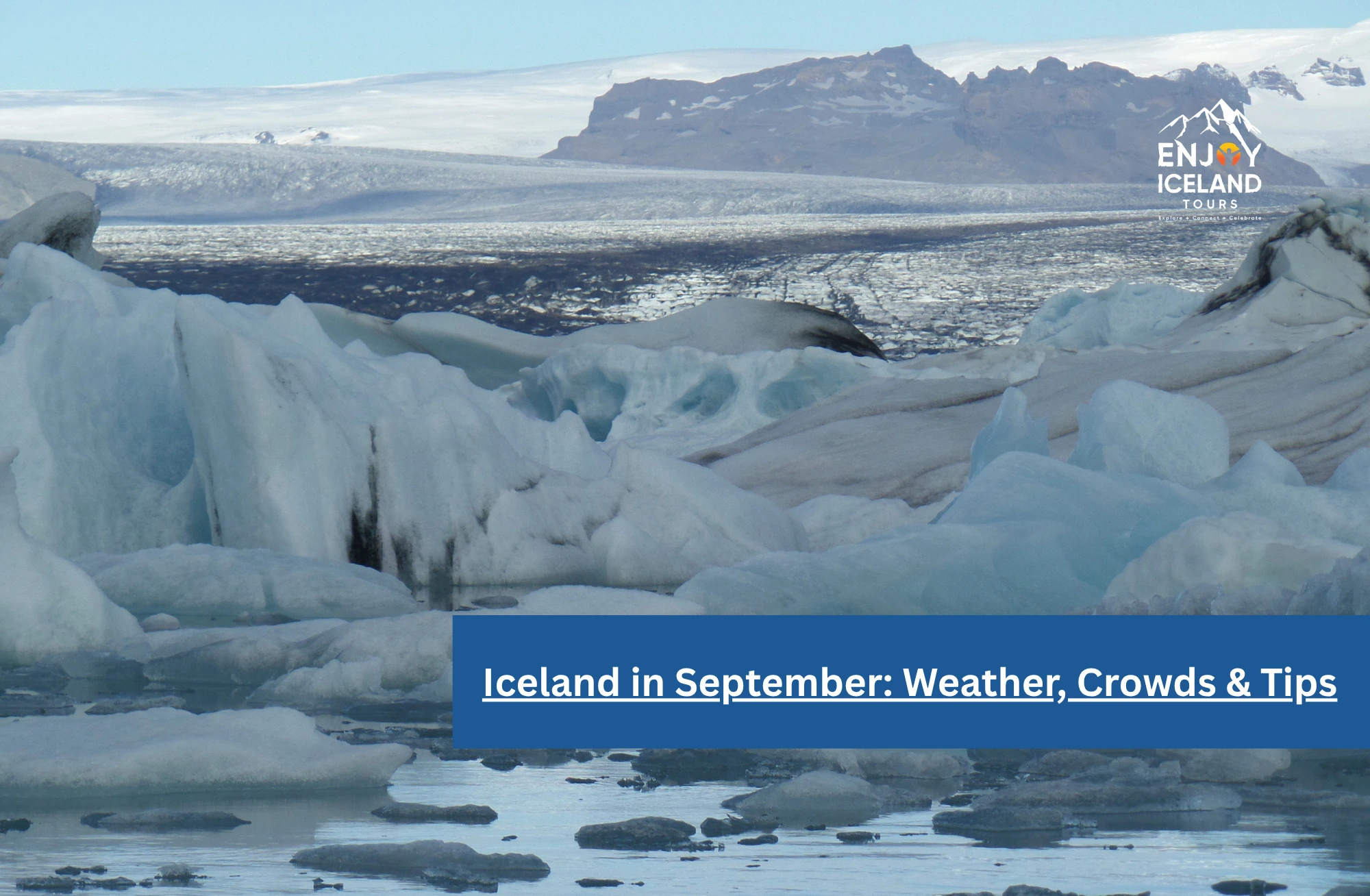
Iceland in September: Weather, Crowds & Tips
September is where Iceland quietly shifts gears. The peak summer crush eases off, the light changes, and for the first time since spring there's enough darkness at night to make the northern lights worth chasing again. If you're deciding whether September works for your trip, here's what actually changes.
Quick answer: September in Iceland brings cooling temperatures (highs around 9°C/48°F), noticeably thinner crowds than August, and the real return of aurora-viewing darkness. Daylight drops from about 14.5 hours on September 1 to roughly 11.5 hours by September 30, so early September still feels summery while late September feels like autumn.
Iceland Weather in September
Temperatures cool noticeably from August. Reykjavik (Icelandic: Reykjavík) typically sees daytime highs around 9°C (48°F) and overnight lows near 5°C (41°F), a real step down from summer, though still mild by the standards of an Icelandic winter. Rain remains a constant companion, September averages around 40mm spread across roughly 23 days, so packing a proper waterproof layer matters as much here as at any other time of year.
Daylight and Northern Lights in September
Daylight is the more dramatic shift. On September 1, the sun sets around 8:43pm, giving just over 14.5 hours of daylight. By September 30, sunset has moved up to around 7:00pm, with daylight down to roughly 11.5 hours. That's a loss of nearly three hours of daylight across a single month, which changes how a day tour feels from the start of September to the end of it. Early in the month you still have plenty of room for a full day out and an evening in Reykjavik (Icelandic: Reykjavík) afterward. By late September, days are structured more like a typical autumn day anywhere else in the world.
That darkness is exactly what makes September the real start of aurora season. Unlike August, where late nights offer only a narrow, often faint window, September gives you meaningfully more hours of usable darkness alongside weather that's still relatively mild compared to deep winter. If seeing the northern lights is a priority, September is a genuinely strong month to book around, better odds than August without the cold and short days of December through February.
September Crowds and Travel Costs
Crowds thin out steadily through the month. The first week or so still carries some late-summer traffic, but by mid-September, the difference at major stops like Gullfoss, Geysir, and the south coast waterfalls is obvious. Parking lots that were full by mid-morning in August have room again, and popular restaurants in Reykjavik (Icelandic: Reykjavík) get easier to book on short notice. For anyone who found August's crowds off-putting, September is often the better trade, similar sights, noticeably calmer conditions.
This shift plays to a private tour's strengths in a different way than peak season does. Instead of racing crowds, a September Golden Circle or South Coast day can move at a more relaxed pace, with a guide who can extend time at a stop that's working well rather than needing to keep to a tight schedule around competing buses.
Pricing tends to ease slightly too, as September falls outside the absolute peak of the summer season, though it's not yet the low season pricing you'd see in November or January. Accommodation availability generally improves as the month goes on, which is worth knowing if your dates are flexible.
Should You Visit Iceland in August or September?
If you're choosing between August and September specifically, September wins on crowds, aurora odds, and often overall value, while August still edges it on daylight and warmth. Neither month is a wrong choice, but if you can shift a flexible trip later into September, particularly the back half, you'll generally get a calmer, more cost-effective version of the same itinerary.
Frequently Asked Questions
What is the weather like in Iceland in September?
Daytime highs average around 9°C (48°F), with overnight lows near 5°C (41°F). Rain is common, averaging around 40mm over roughly 23 days.
Is September a good month for the northern lights in Iceland?
Yes, it is a genuinely strong month, with meaningfully more hours of usable darkness than August and milder weather than deep winter.
Is September less crowded than August in Iceland?
Yes. Crowds thin out steadily through the month, especially after the first week or two, once school schedules pull a lot of summer travelers home.