


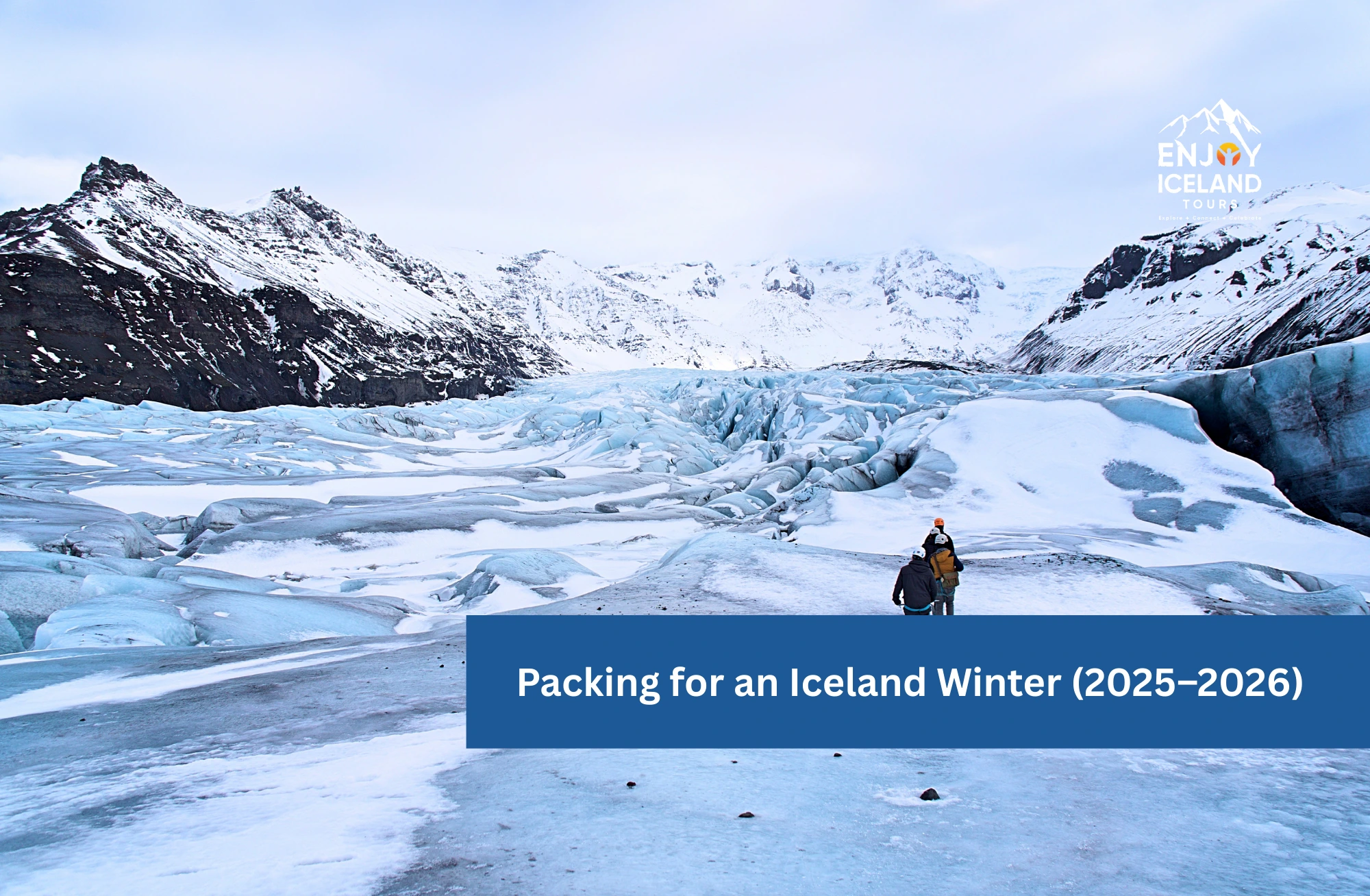
What to Pack for an Iceland Winter Adventure
The most reliable approach is alayering system combined with activity-specific gear, not bulky single-purpose clothing.
Essentials vs. Optional: Pack With Intent
Essentials (Almost Everyone Needs These)
- Full layering system (base, mid, outer)
- Waterproof insulated boots
- Gloves, hat, neck protection
- Microspikes (urban ice)
- Power bank + headlamp
Optional (Pack Based on Activities)
- Snow pants (Northern Lights, glacier walks)
- Puffer layer (long outdoor stops)
- Sunglasses (snow glare, low sun)
- Thermos (extended outdoor waiting)
The Layering System (Mapped to Real Use)
Base Layer - Moisture Control (Essential)
Best for:All activities
- Merino wool or synthetic thermal tops and bottoms
- Worn during city walks, tours, and glacier activities
Why it matters:
Even light exertion (walking on snow, entering/exiting vehicles) causes perspiration. Cotton traps moisture and leads to chilling once you stop moving.
Mid Layer - Heat Retention (Essential)
Best for:Northern Lights tours, long stops outdoors
- Fleece pullover or wool sweater
- Optional lightweight down/synthetic puffer for night use
Use logic:
- Daytime sightseeing: fleece alone
- Night aurora viewing: fleece + puffer
Outer Layer - Wind & Water Protection (Non-Negotiable)
Best for:Waterfalls, ice caves, exposed viewpoints
- Waterproof, windproof shell jacket (hood required)
- Waterproof shell pants or insulated snow pants
Experience-based note:Wind protection matters more than thickness. A thin insulated jacket without wind resistance underperforms in Icelandic conditions.
Footwear: Match Boots to Ice Conditions
Urban Ice (Reykjavik, Parking Areas, Boardwalks)
Scenario:Polished ice, slush, refreeze cycles
- Waterproof insulated hiking boots
- Microspikes essentialfor sidewalks and viewing platforms
Glacier & Ice Cave Terrain (Guided Tours)
Scenario:Compact snow, uneven ice
- Sturdy hiking boots with ankle support
- Crampons provided by tour operators(microspikes are not sufficient here)
What to Avoid
- Sneakers or casual boots: poor insulation, no grip
- Fashion boots: slippery soles, water penetration
Accessories by Activity
Northern Lights Tours
- Insulated gloves (waterproof)
- Beanie covering ears
- Neck gaiter or buff
- Snow pants (standing still for long periods)
Ice Caves & Glacier Walks
- Waterproof outer layers
- Extra socks
- Gloves with grip
City Use & Short Walks
- Same base layers
- Lighter mid layer
- Microspikes for icy streets
Geothermal Lagoons
- Swimwear
- Flip-flops (optional)
- Quick-dry towel if not provided
Winter Tech & Small Gear That Actually Helps
- Power bank:Cold drains phone batteries quickly
- Headlamp:Useful for dark parking areas and night walks
- Insulated bottle:Prevents water freezing; useful during long tours
FAQ
Do I really need snow pants?
+
Yes - for Northern Lights tours, glacier walks, or any activity involving long outdoor stops.
Can I wear jeans at all?
+ Only for short indoor-to-indoor city use. Denim absorbs moisture and dries slowly.
Are umbrellas useful?
+ No. Wind renders them ineffective; rely on waterproof outer layers.
Why bring sunglasses in winter?
+ Low-angle sun and snow glare can cause eye strain even in cold weather.
Conclusion: A Simple Packing Logic That Works
Pack forwind first, moisture second, insulation third.
If your system can handle:
- Standing still at night (aurora),
- Moving slowly on ice (caves, glaciers),
- Short urban walks on refrozen streets,
...it will handle Icelandic winter comfortably. Use layers to adjust, not bulky clothing to compensate. Dry, wind-protected travelers enjoy winter more than overpacked ones.