


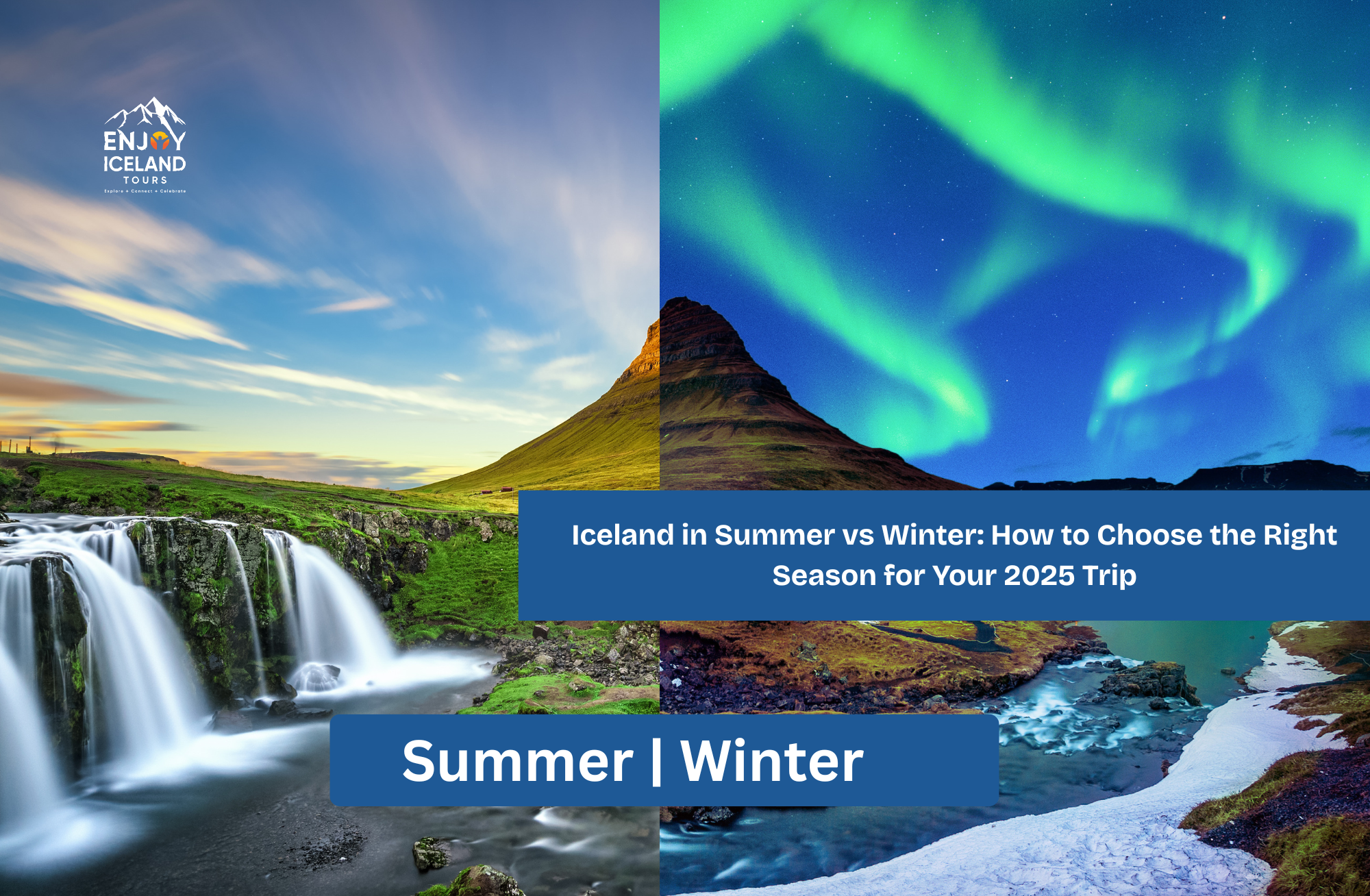
Iceland in Summer vs Winter 2025: How to Choose the Right Season to Visit
Which Season Do You Prefer?
It is a hard call. In the course of the year Iceland changes greatly which in turn presents very different what to see. Midnight sun or northern lights? Lush green fields or white landscape? Clear roads or ice covered waterfalls?
This guide weaves out what really changes in Iceland between summer and winter—from the weather which goes without saying to how each season changes your travel experience, accessibility, what you can do and that overall feel.
We put it together for travelers who are looking for more than just pretty pictures—they are looking to pick the time of year that best fits their travel style, comfort level and curiosity.
Iceland in Summer: Endless Light and Open Roads
What to Expect
Summer in Iceland goes from May until early September, during which time the majority of travel occurs in June, July and August.
In that period the days are very long—in June in fact the sun does not set at all which gives you almost 24 hours of light.
This unending light brings out a special rhythm. At 10 PM you will see us out on the trails, driving scenic routes in that golden twilight, and we’ll be at waterfalls until late into the evening. A dream for outdoor enthusiasts and photographers.
Pros of Visiting in Winter
As days grow longer at night you are able to pack more into each day without rushing.
Mild Weather: Average temperature is between 10°C to 15°C (50–59°F). It may not be what you’d call warm but it is very doable for a day out on the trails and to see the sites.
Accessible Roads: Most all of the country including highland routes (F-roads) is open and safe to travel.
Wildlife: This is the height of the season for viewing puffins, whale watching, and seeing Iceland’s wildflowers in bloom.
Camping & Road Trips: Conditions perfect for Ring Road trips, camping vans, and outdoor travel.
What to Watch Out For
Crowds: Iceland is a summer hot spot. At the main attractions like Skógafoss and Reynisfjara you will see large crowds by mid morning.
Higher Prices: Summer is high season which also affects accommodation, rental cars and tours.
No Northern Lights: Extended daylight which in turn makes it impossible to see the aurora during summer.
Iceland in Winter: Lights of the North and Arctic Silence
What to Expect
Summer in Iceland goes from May until early September, during which time the majority of travel occurs in June, July and August.
In that period the days are very long—in June in fact the sun does not set at all which gives you almost 24 hours of light.
This unending light brings out a special rhythm. At 10 PM you will see us out on the trails, driving scenic routes in that golden twilight, and we’ll be at waterfalls until late into the evening. A dream for outdoor enthusiasts and photographers.
Pros of Visiting in Winter
As days grow longer at night you are able to pack more into each day without rushing.
Mild Weather: Average temperature is between 10°C to 15°C (50–59°F). It may not be what you’d call warm but it is very doable for a day out on the trails and to see the sites.
Accessible Roads: Most all of the country including highland routes (F-roads) is open and safe to travel.
Wildlife: This is the height of the season for viewing puffins, whale watching, and seeing Iceland’s wildflowers in bloom.
Camping & Road Trips: Conditions perfect for Ring Road trips, camping vans, and outdoor travel.
What to Watch Out For
Crowds: Iceland is a summer hot spot. At the main attractions like Skógafoss and Reynisfjara you will see large crowds by mid morning.
Higher Prices: Summer is high season which also affects accommodation, rental cars and tours.
No Northern Lights: Extended daylight which in turn makes it impossible to see the aurora during summer.
Iceland in Winter: Lights of the North and Arctic Silence
What to Expect
In Iceland winter runs from late October to April which sees also the best snow conditions in December to February.
Days are very short at that time—at times only 4 to 6 hours of light in the middle of winter which in turn presents an amazing opportunity to see the northern lights, visit frozen waterfalls and explore ice blue caves.
In Iceland winter is a time of stillness. The landscapes reduce to their essence, winds howl across the black sand plains and we are left with a sense of darkness and isolation which in turn creates a very powerful atmosphere.
Pros of Visiting in Winter
Northern Lights Season: Iceland is a top place on Earth to view the aurora. Also report that clear skies and long nights improve your chances.
Winter-Only Activities: Think ice cave tours, snowmobile rides, and natural hot springs which are covered in snow.
Lower Prices: While during Christmas and New Year’s prices go up, for the most part the winter is a low season which makes it a more affordable time.
Fewer Crowds: Major attractions are more tranquil and of a more private nature—even the Golden Circle which is usually very crowded in July has now dried up of people.
What to Watch Out For
Challenging Driving Conditions: Snow, ice, and at times extreme storms make for dangerous driving. In some areas which have reported very heavy fall of snow (which includes the Highlands) some roads have closed completely.
Limited Daylight: In some parts of the world during December the sun may come up at 11 AM and set at 3 PM which you will have to take into account.
Cold and Wind: In some areas we can see temperatures drop to below zero (as low as -5°C/23°F) and in particular near the coast or in open areas.
Comparing Key Travel Factors: Vacation Time vs Winter
What Kind of Traveler Are You?
Choose Summer If You:
Prefer independent travel with flexible schedules
Want to trek in Iceland’s outback or do multi day hikes.
Bringing along the kids or seniors and looking for safer conditions.
Crowds be out but access is in.
Choose Winter If You:
Are chasing the Northern Lights
Love dramatic, wintry landscapes
Sure thing with guided tours instead of self driving.
Prefer quiet, contemplative travel without crowds
A Note on Shoulder Seasons
Less tourists, mild weather (by comparison) and the chance to see the aurora and open roads.
Final Thoughts
In Iceland there is no such thing as a wrong time to visit. It’s which season best suits your plans.
In the summertime you will see and do more, go out later into that golden light.
In wintertime you will slow it down, feel the weight of the land, and look up in amazement as the sky puts on a green and pink show.
In that sense Iceland is a place you do not see—you feel it out. Choose your season not which the calendar says but what will set in to you for a story to take back home.