


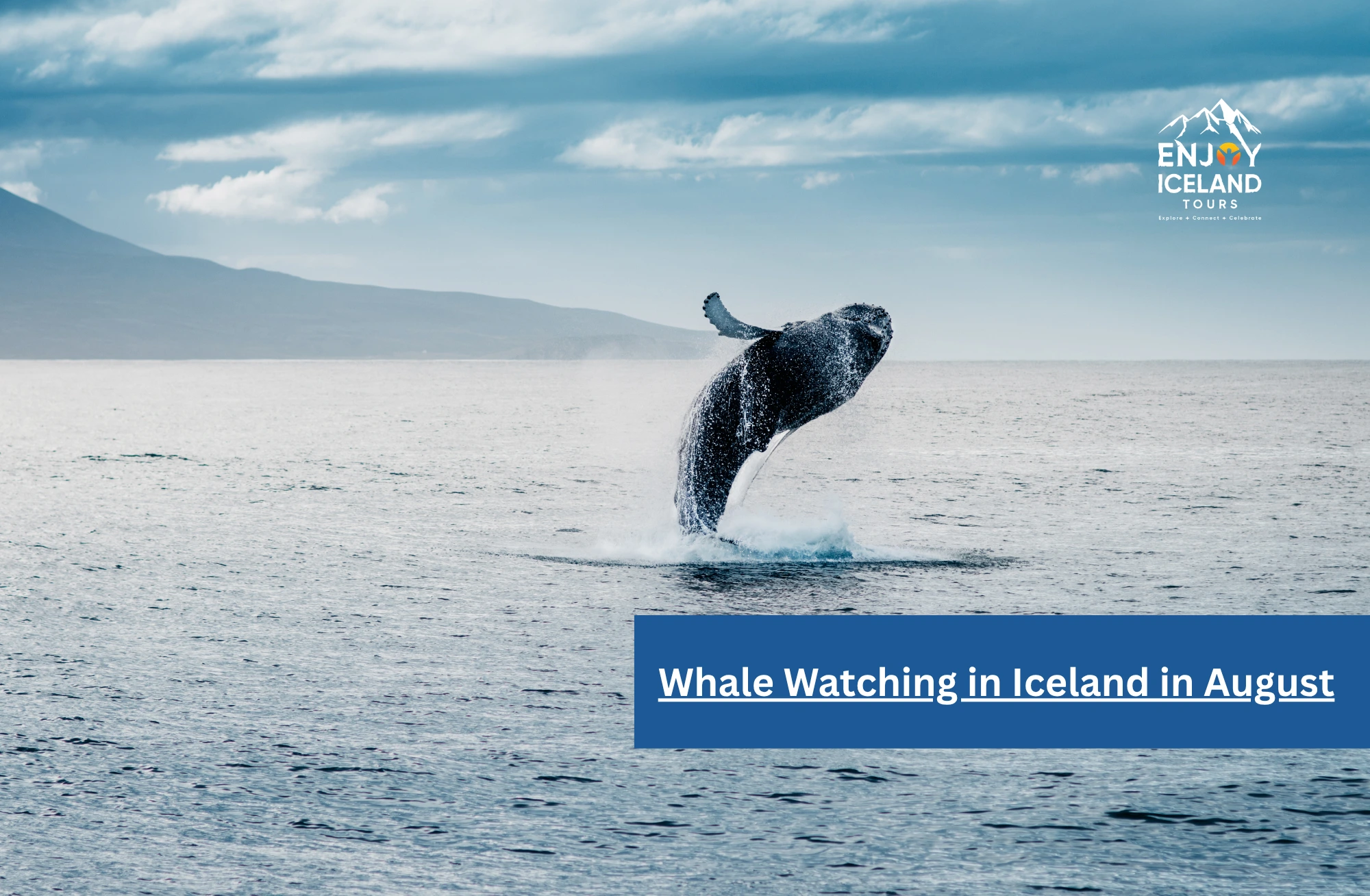
Whale Watching in Iceland in August
Whale watching in Iceland runs from spring through autumn, and August falls within one of the strongest parts of that season. By this point in the season, prey remains abundant in many of Iceland's coastal waters, supporting strong whale activity. August can offer consistently good opportunities for sightings, although conditions and sightings vary by location and day.
Quick answer: August falls within one of the strongest parts of Iceland's whale watching season, though sightings vary by day and location. Boats depart from Reykjavik (Icelandic: Reykjavík)'s Old Harbour for minke whales, dolphins and occasional orcas, while Husavik (Icelandic: Húsavík) in the north is one of Iceland's leading whale watching destinations. Most trips run two to three hours and can be combined with a Golden Circle or South Coast day.
Best Time for Whale Watching in Iceland
The Old Harbour in Reykjavik (Icelandic: Reykjavík) is the most convenient departure point if your base is the capital, with boats heading out into Faxafloi (Icelandic: Faxaflói) Bay, where minke whales are commonly spotted alongside humpback whales, white-beaked dolphins, and occasionally orcas. Further north, Husavik (Icelandic: Húsavík) is widely regarded as one of Iceland's leading whale-watching destinations, largely because of Skjalfandi (Icelandic: Skjálfandi) Bay's nutrient-rich waters, which regularly bring in humpback whales, minke whales, and, less predictably, blue whales.
If whale watching is a priority rather than a nice extra, it's worth thinking about where it fits into your route. A Reykjavik (Icelandic: Reykjavík) departure keeps things simple if you're short on time. If you have more days and want to explore one of Iceland's best-known whale-watching areas, working a stop near Husavik (Icelandic: Húsavík) into a longer itinerary is a strong option, and that's exactly the kind of routing decision a custom or multi-day tour is built to handle, since we can build the schedule around the boat departure times rather than the other way around.
Weather in August tends to cooperate more than it does later in the year. Calmer seas make for a more comfortable trip and generally better visibility, though Iceland's coastal weather can still turn quickly, so it's worth keeping your schedule flexible on the day if possible rather than locking in a single narrow window.
Combining Whale Watching with a Golden Circle Tour
Most tours run two to three hours and depart multiple times a day during summer, so it's realistic to fit a whale watching trip around a Golden Circle or South Coast day rather than needing to dedicate an entire day just to it. If you're staying in Reykjavik (Icelandic: Reykjavík), an early boat followed by an afternoon on the Golden Circle is a genuinely workable combination.
What to Pack for Whale Watching in August
A practical note: even in August, it's noticeably colder out on the water than it is on land, especially once the boat picks up speed. Bring a proper jacket regardless of how warm the day feels at the harbour. Most operators provide overalls, but layering underneath still matters.
If you're building your Iceland trip specifically around wildlife, August gives you a rare overlap: whale watching conditions are still strong, puffins may still be present at some colonies in early August, although their numbers generally decline as the month progresses, and the days are long enough to fit more into a single itinerary than you could earlier or later in the year. It's worth planning your route with that overlap in mind rather than treating each activity as a separate booking
Frequently Asked Questions
Is August a good time for whale watching in Iceland?
Yes, August falls within one of the strongest parts of the season, although conditions and sightings vary by location and day.
Where is the best place to see whales in Iceland, Reykjavik (Icelandic: Reykjavík) or Husavik (Icelandic: Húsavík)?
Reykjavik (Icelandic: Reykjavík) is more convenient if you're short on time, departing from the Old Harbour. Husavik (Icelandic: Húsavík), further north, is widely regarded as one of Iceland's leading whale watching destinations.
How long does a whale watching tour take?
Most tours run two to three hours, which makes it realistic to combine with a Golden Circle or South Coast day rather than dedicating a full day to it.