


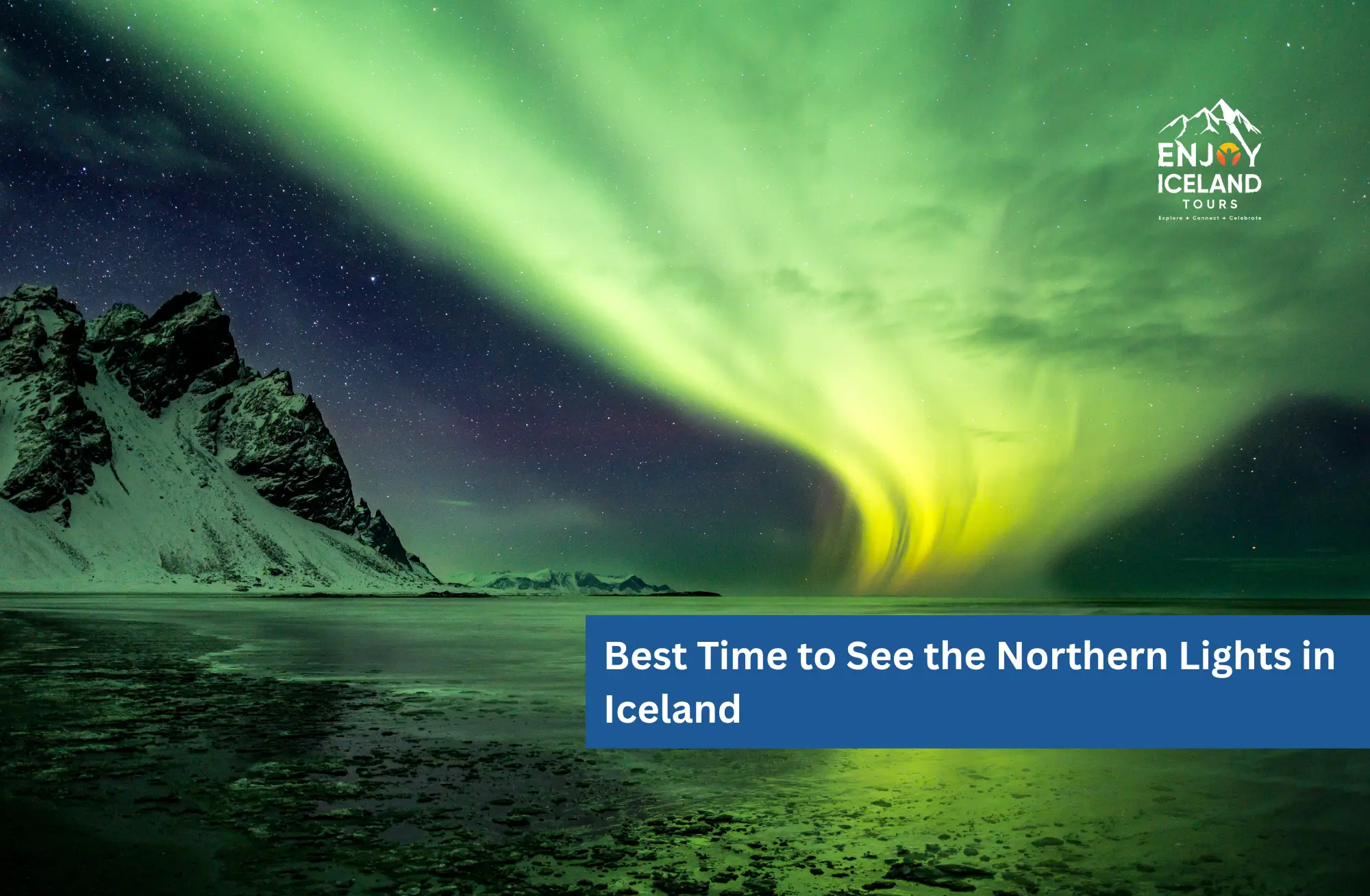
Best Time to See the Northern Lights in Iceland, Month by Month
Best Time to See the Northern Lights in Iceland, Month by Month
Ask ten guides here when the northern lights are at their best and you will get ten slightly different answers, because the honest truth is that no calendar date guarantees a show. The aurora answers to darkness and clear sky, not to a booking system. What a guide can tell you, from years of standing outside at eleven at night waiting for a break in the cloud, is which months consistently stack the odds in your favor, and which ones ask more patience from you than others.
Quick answer: Aurora season in Iceland runs from late August through mid April, the stretch when nights are dark enough for the lights to be visible at all. September through March all offer real chances. October through February offer a good balance of increasingly long nights and the possibility of manageable travel conditions, although weather can vary considerably from month to month and year to year. December and January hand you the darkest skies of the year but also the roughest storms. September is milder and gentler to travel in, with slightly shorter aurora windows to show for it.
Why This Is Seasonal at All
The aurora itself does not take a break. It is driven by solar wind hitting Earth's magnetic field, and that activity runs year round regardless of season. What actually shuts the viewing season down each summer is Iceland's own sky. Around the summer solstice, Reykjavik barely gets dark at all, and an active aurora directly overhead is simply invisible against a sky that never goes fully black. Nights start closing in again toward the end of August, and by September there is finally enough darkness for a genuine look. That window holds until mid April, when the lengthening spring daylight closes it back down.
September: The Season Reopens
September is the first genuinely workable month, and it has a personality of its own within the season. Nights are dark enough by the second half of the month, but daylight still provides plenty of time for daytime sightseeing, so you get a full day of sightseeing alongside an evening aurora watch rather than choosing between them. Road conditions are generally easier than later in the season, temperatures are still mild by Icelandic standards, and storm systems that define midwinter have not really arrived yet. The tradeoff is that the dark window each night is shorter than what November or December will offer, so your total odds across a single evening are a touch lower. For a broader sense of what else the month brings, our Iceland in September guide covers weather, crowds, and pricing beyond just aurora chances.
October: The Sweet Spot for a First Trip
October is where the season starts to earn its reputation. Darkness stretches out further each week, weather is still generally manageable rather than stormy, and the combination tends to suit travelers who want a real shot at the lights without giving up daytime sightseeing entirely. It is one of the months guides recommend most often to first time visitors trying to balance a full itinerary against aurora hopes.
November: Long Nights, Less Predictable Skies
By November the nights have opened up considerably, giving you a wide window to work with most evenings. The catch is that weather turns more temperamental here, with cloud systems rolling through more often than in October. This is the point in the season where flexibility starts to matter more than raw darkness. A trip with two or three nights built in, rather than one, meaningfully changes your odds in November in a way it did not need to in September.
December and January: Darkest Skies, Toughest Weather
These two months hand you the longest nights of the year, sometimes only a handful of daylight hours around midday before darkness settles back in. On paper that is the widest possible aurora window of the entire season. In practice, it is also when winter storms and difficult driving conditions can become more frequent, and cloud cover or road closures can shut a viewing plan down entirely for a night or two at a stretch. Travelers who come prepared to wait out a rough night or two, rather than expecting a clear sky on demand, tend to have the better experience here.
February: The Quiet Favorite
February rarely gets talked about the way October or December do, but plenty of guides consider it one of the strongest months of the whole season. Nights are still long, storm activity tends to ease compared to the peak of midwinter, and February sits closer to the spring equinox, a period aurora watchers have long associated with a modest uptick in geomagnetic activity. It is a genuinely underrated pick.
March: The Last Strong Window
March keeps most of its nights dark enough for solid viewing, and like September, it falls close to the spring equinox, a period sometimes associated with increased geomagnetic activity. The catch is speed. Daylight returns quickly through the month, and by the final week the practical viewing window is already shrinking fast. Earlier in March plays much like a calmer version of November, later March starts to feel like the season winding down.
April Onward: The Curtain Closes
By the second half of April, Iceland's nights are too short and too bright again for any realistic viewing, and the season goes quiet until the darkness returns in late August the following year.
What Actually Moves the Needle, Whatever Month You Pick
The calendar sets your odds, but a handful of things matter more on any given night than which month it is. Clear sky beats everything, a strong aurora behind thick cloud is simply invisible, so weather on the night wins over solar activity every time. Distance from Reykjavik's light pollution makes a real difference too. And a short range forecast checked on the day itself is worth more than a plan built weeks ahead around one specific date, since conditions shift fast here. If you are bringing a camera, our Northern Lights photography guide walks through the settings and gear that actually matter, and our Northern Lights myths vs reality piece is worth a read beforehand too, since a few common misconceptions tend to set the wrong expectations before anyone even steps outside. A private Northern Lights tour, where the guide is reading conditions and picking the location for that specific night rather than driving to one fixed spot regardless of the sky, gives you a real edge over planning everything in advance.
Matching a Month to Your Own Trip
If a full day of sightseeing matters just as much as aurora odds, September and October give you both without much compromise. If seeing the lights is the whole point of the trip, November through February offers the longest nightly windows to work with, and February in particular tends to strike an unusually good balance of darkness and calmer weather. Whichever end of the season you land on, building in more than a single night changes your odds more than picking the perfect month ever will.
Frequently Asked Questions
What is the single best month to see the northern lights in Iceland?
There genuinely is not one. Visibility depends on clear skies as much as darkness, and clear skies do not follow a calendar. October and February are often cited as the strongest overall balance, but September through March all offer real chances.
Can you see the northern lights in Iceland in summer?
Not normally. Around the summer solstice the sky barely gets dark at all, and even a genuinely active aurora is invisible against nights that never go fully black.
Do you need to travel far from Reykjavik to see the northern lights?
Getting away from the city's light pollution significantly improves what you can see, though on a strong, active night the aurora is occasionally visible even from Reykjavik's outskirts. A guided trip to a darker location can improve viewing conditions and help you make the most of a clear, active night.
How many nights should I plan for an aurora trip?
Since clear skies are never guaranteed on any single night, planning for at least three to four nights during aurora season meaningfully improves your overall odds compared to a one night visit.
Is it true that aurora activity increases around the equinoxes?
Many aurora watchers, and some published research, point to a modest uptick in geomagnetic activity around the spring and autumn equinoxes. It is one of the reasons September and March are worth considering even though neither is the darkest month of the season.