


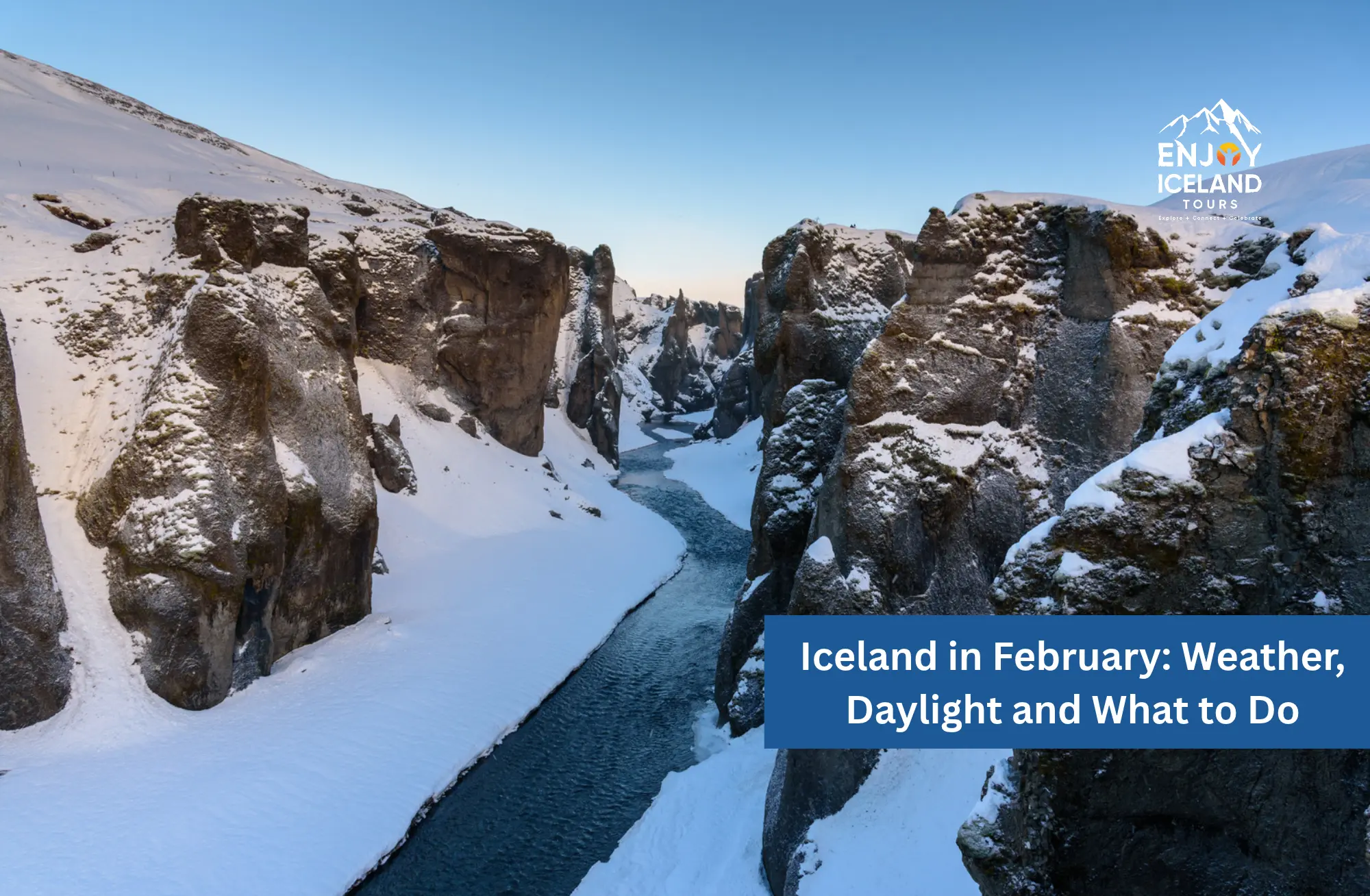
Iceland in February: Weather, Daylight and What to Do
February is one of the quietest months to visit Iceland, and one of the most atmospheric. The days are short but grow noticeably longer throughout the month, the nights are still dark enough for the Northern Lights, and many of Iceland's main attractions can be visited without the summer peak-season crowds.
Quick answer: In February, Reykjavik has about 7 hours of daylight at the start of the month and up to about 10 hours by the end. In Reykjavík, February temperatures typically average around 3°C during the day and -2°C overnight. Conditions vary across the south, and wind, precipitation and icy surfaces can make outdoor activities feel considerably colder. It is a good month for the Northern Lights, ice caves, geothermal baths and a Golden Circle day, as long as your plans have room for weather.
Daylight in February
Daylight is the main thing to plan around. At the start of February the sun rises in Reykjavik at about 10:00 and sets around 17:00, which gives roughly 7 hours. By the end of the month you have close to 10 hours. That is a big gain across four weeks, so a trip in the last week of February feels noticeably different from the first.
Plan your main outdoor sights between mid-morning and late afternoon. Keep evenings for hot springs, dinner or an aurora evening.
Weather and what to wear
In Reykjavik and the south, February temperatures usually range from about 0 to 4 degrees Celsius. February 2026 was colder than the long-term average: Reykjavík recorded a monthly mean temperature of -0.8°C, which was 1.3°C below the 1991 to 2020 average, according to the Icelandic Met Office. The north is colder, and the highlands are far colder.
The bigger factor is wind and wet snow, which make the temperature feel lower. Layers work best: a warm base layer, a fleece or wool middle layer, and a windproof and waterproof outer layer. Add waterproof boots with good grip, gloves and a hat. You can find more detail in our winter guide to what to do and where to go in Iceland.
Northern Lights in February
February is a good month for the Northern Lights because the nights are long and dark. The lights are never certain, since they depend on solar activity and clear skies, but a month with this many dark hours gives you more chances. The aurora season in Iceland runs from late August to mid April, so February sits right in the middle of it.
If this is a priority for your trip, build in more than one evening so a cloudy night does not end your chances. You can see how this works on a private Northern Lights tour.
Ice caves
Winter is the season for natural ice caves, and February is within it. Conditions change from week to week, and what is safe to visit depends on the glacier and the weather, so these trips are led by qualified guides and adjusted on the day. Our guide to ice cave tours in Iceland explains what to expect.
The Golden Circle in winter
The Golden Circle works well in February. Þingvellir, Geysir and Gullfoss look very different under snow and ice, and with fewer people around you can take your time. Short daylight means the day needs a good order of stops, and road conditions can change what is possible, so a flexible plan helps. A private Golden Circle tour lets your guide adjust the route and timing to the conditions.
Hot springs and geothermal baths
February is a natural time for a soak. The air is cold, the water is warm, and steam rising in the dark is part of the experience. There are many options near Reykjavik and on the Golden Circle, and we cover them in our guide to Iceland hot springs beyond the Blue Lagoon. Check opening hours before you go, and book ahead for the busiest places.
What happens in Reykjavik in February
The Winter Lights Festival takes place in February, with light installations and events across the Reykjavík capital area. In 2027, it runs from 4 to 7 February. Dates vary each year, so check the official programme before travelling.
Two Icelandic food traditions fall in February or close to it. Bolludagur is the cream bun day, followed by Sprengidagur, when people eat salted meat and split pea soup until they cannot move. Both come before Lent, so the dates depend on Easter. In 2027 they fall on 8 and 9 February. Our guide to Icelandic winter food culture has more on what to try.
Planning a February trip with a private guide
Short days reward a local plan. On a private tour, the day is built around the conditions: a guide can start earlier, move a stop, or choose a different route if the weather turns. You also keep the evening free for the Northern Lights or a long dinner without driving yourself in the dark.
A custom private tour is a good starting point if you want to combine a Golden Circle day, a hot spring and an aurora evening into one trip. We have been running private tours from Reykjavik since 2016, and every tour is for your own group.
Frequently Asked Questions
Is February a good time to visit Iceland?
Yes, if you want winter scenery, long nights for the Northern Lights, ice caves and fewer crowds. Days are short, so plan around the daylight and allow for weather.
How much daylight does Iceland get in February?
About 7 hours at the start of the month in Reykjavik, rising to up to 10 hours by the end.
What is the weather like in Iceland in February?
In Reykjavik and the south, temperatures usually range from about 0 to 4 degrees Celsius. Wind, rain, sleet and snow are common, so waterproof layers matter more than extreme cold gear.
Can you see the Northern Lights in Iceland in February?
Often, yes. The nights are long and the season runs from late August to mid April. They are never certain, so plan more than one evening.
Are the Golden Circle and ice caves open in February?
The Golden Circle is open all year, although conditions can change what is possible on a given day. Ice cave visits are a winter activity and depend on conditions on the day.