


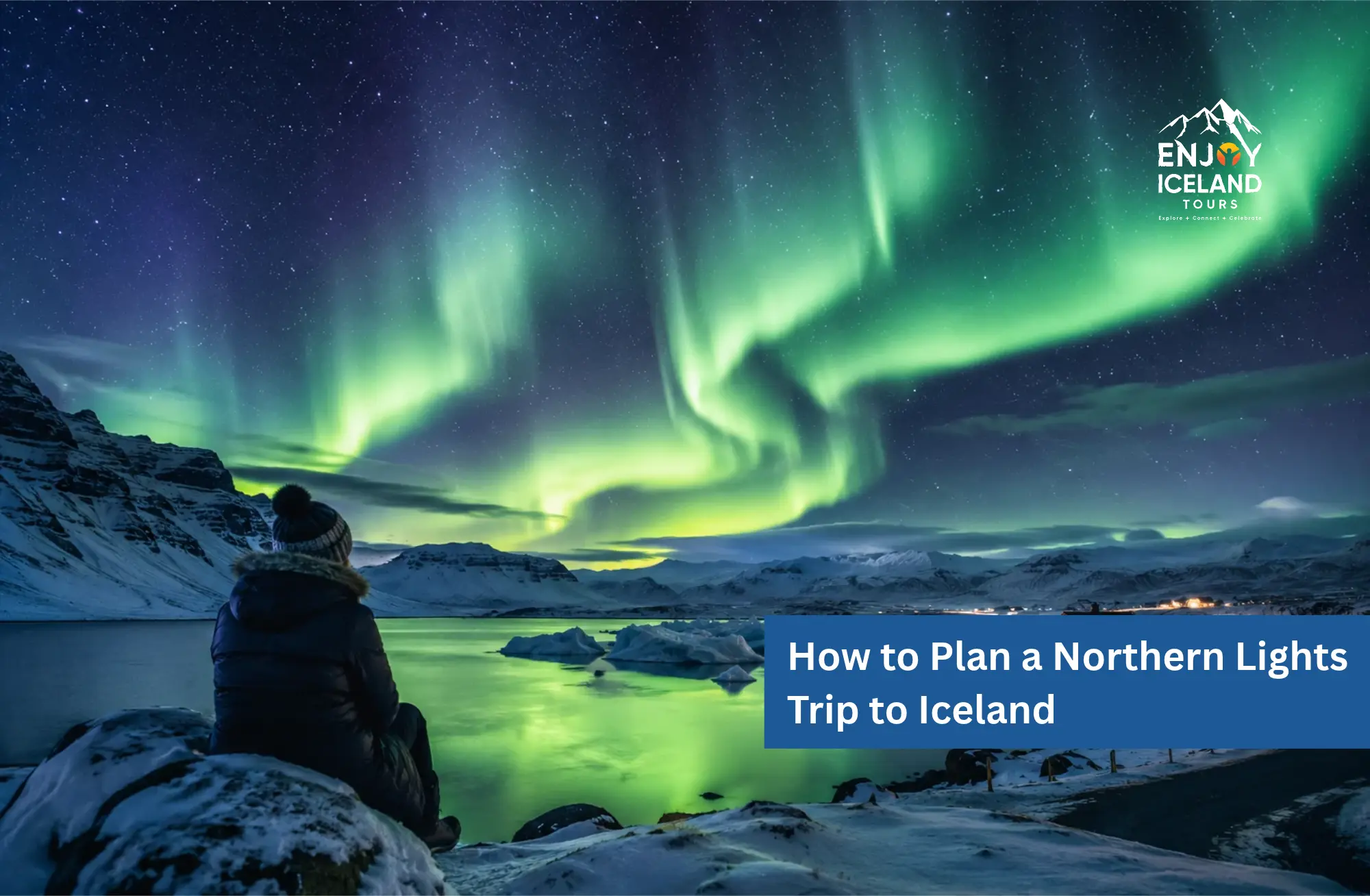
How to Plan a Northern Lights Trip to Iceland
Seeing the Northern Lights is on many Iceland wish lists, and a bit of planning improves your chances. The lights depend on the sun and the sky, so you cannot control them. You can choose the right months, the right number of nights, and the right way to spend the evening.
Quick answer: The Northern Lights season in Iceland runs from late August to mid April. You need darkness, clear skies and some solar activity. Plan at least two or three evenings, check the Icelandic Met Office aurora forecast, dress in warm layers, and keep your schedule flexible. A private guide watches the forecast and the clouds for you and plans the night around them.
When the season runs
The Northern Lights are visible in Iceland from late August to mid April, when the nights are dark enough. In the summer months the sky stays light, so there is no aurora season then. The long nights of midwinter give you the most hours, but the shoulder months can be excellent too, and they are easier on the weather and the roads.
The best months
There is no single best month. December, January and February have the longest nights. September, October and March are popular because the weather is often milder, and many people find the autumn and spring months suit a wider trip. April is the last month of the season, and the best chance comes early in it. We cover that in our guide to Iceland in April.
What you need to see them
Three things have to line up. The first is darkness, which is why you look after the sun has set and away from city lights. The second is clear skies, since cloud blocks the view even when the lights are strong. The third is solar activity, which varies from night to night.
A bright moon can wash out fainter displays, so the moon phase also matters. You cannot predict the lights with certainty, but you can choose better nights.
How to read the forecast
The Icelandic Met Office publishes an aurora forecast that combines the expected activity level with the cloud cover. Check it each afternoon, and look at the cloud map as well as the activity number. A modest display under clear skies often beats a strong display behind cloud. Forecasts change during the day, so check again before you leave.
How many nights to plan
Give yourself more than one chance. Two or three evenings is a sensible minimum. If the first night is cloudy, you still have another. This is also why many travelers fit the Northern Lights into a longer trip, with sightseeing by day and the aurora as an evening activity. For ideas, see our 3 day Iceland itinerary.
What to wear
The nights are cold, and you may be standing still for a while. Dress in layers: a warm base layer, a fleece or wool middle layer, and a windproof and waterproof outer layer. Add insulated boots, warm socks, gloves, a hat and a scarf. Hand warmers help. Bring a thermos if you can, and keep your phone and camera batteries warm in an inside pocket.
Photographing the lights
You do not need special gear to enjoy the aurora, but good photos need some preparation. A tripod keeps the camera steady for long exposures. Use a wide lens, a high ISO and an exposure of several seconds, and turn off the flash. Phones with a night mode can capture a decent image if you hold them very still or use a small tripod.
How a private guide plans the night
A private tour takes the planning off you. Your guide watches the forecast and the cloud cover, chooses the direction for the night, and changes the plan if the sky changes. You stay warm, and you are not behind the wheel in the dark. The group is your own, so the pace is yours, and you do not have to wait for anyone else.
The minimum age for our Northern Lights tour is 5 years. You can read more on our private Northern Lights tour page. If you want to combine an aurora evening with a day of sightseeing, a custom private tour lets us plan both. Enjoy Iceland Tours is a family-owned company in Reykjavik, running private tours since 2016.
Frequently Asked Questions
When is the Northern Lights season in Iceland?
From late August to mid April, when the nights are dark enough.
What is the best month to see the Northern Lights in Iceland?
There is no single best month. The midwinter months have the longest nights, and September, October and March are popular because of milder weather.
How many nights do I need to see the Northern Lights?
Plan at least two or three evenings, since clouds and activity change from night to night.
How do I check the Northern Lights forecast in Iceland?
Use the Icelandic Met Office aurora forecast, and check both the activity level and the cloud cover.
What should I wear to see the Northern Lights?
Warm layers, a windproof and waterproof outer layer, insulated boots, gloves and a hat.